Borgo Terra Open-Air Museum
Open-air museum
Rinascimentale con integrazioni barocche
1561–1583
Il complesso fu voluto da Giovan Battista I Protonobilissimo e il progetto è attribuito a Giovanni Maria Tarantino di Nardò. La chiesa dello Spirito Santo, a navata unica, è una delle più significative testimonianze dell'architettura rinascimentale salentina nel linguaggio degli ordini mendicanti. Il convento fu sede dell'Accademia degli Eclissati nel 1732, diventando un importante centro culturale per il basso Salento. Dopo la soppressione napoleonica del 1809 cadde progressivamente in abbandono, fino al restauro del 1996 in occasione della riunione del Consiglio dei Ministri dell’Agricoltura dell’Unione Europea, che ne ha restituito leggibilità e dignità.
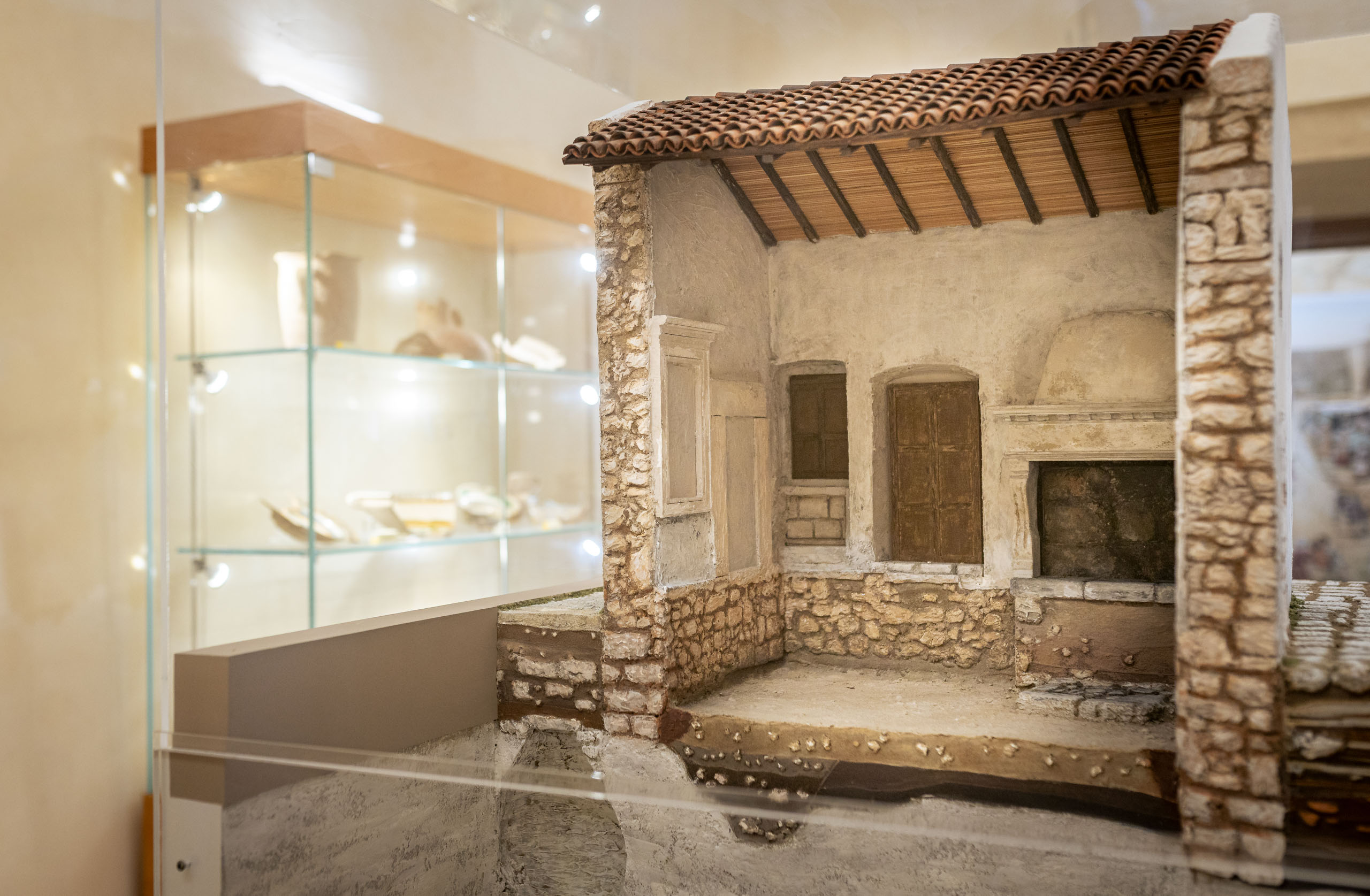
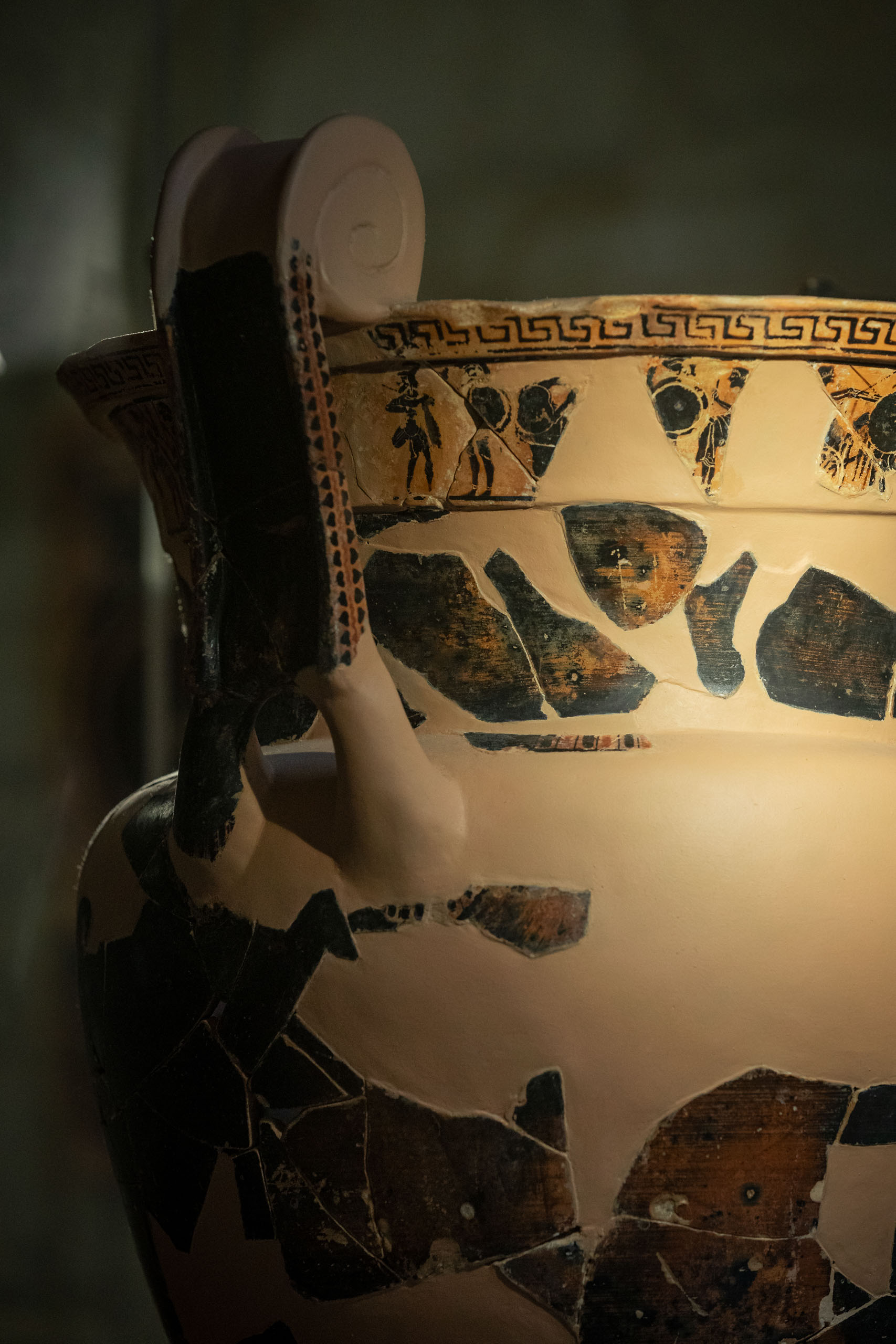
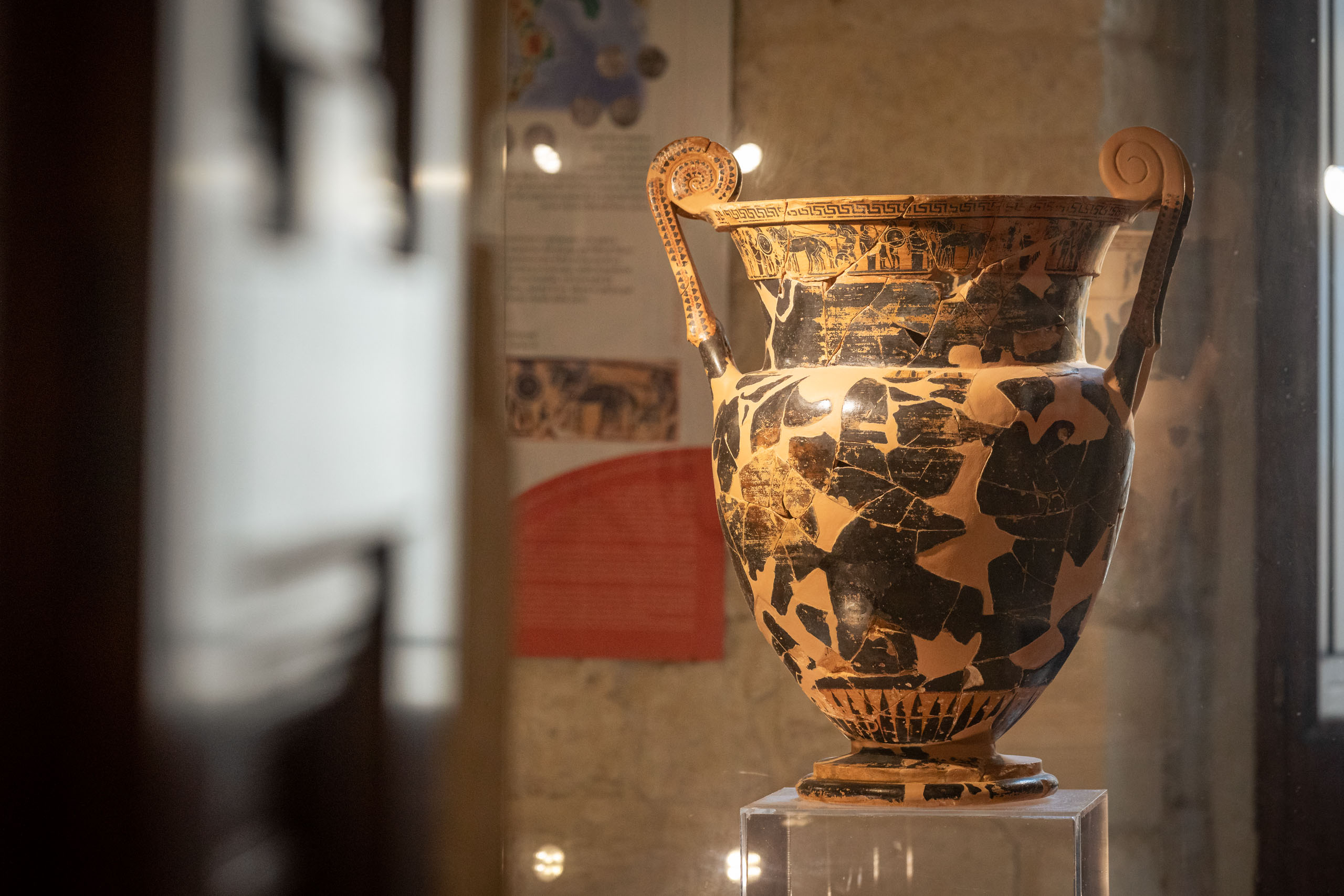
The first itinerary tells the story of the city of the Messapians, founded in the 8th century BC. As you enter, in front of a large model, the ancient settlement re-emerges beside the town of today, connected to it by a tenacious thread: its roads and walls. You come to understand that Via Salentina follows one of the main axes of the ancient city, and that the Villa Comunale stands where the lacus once lay, the basin that supplied the community with water for many centuries, beginning in the Iron Age. From room to room, everyday life takes shape: from the huts of the Iapygians to the first stone houses, and on to the banquets of aristocratic families — the original brazier from Cunella, cups from Greece, silver coins from the cities of Magna Graecia and the magnificent Athenian krater by the Antimenes Painter, the only intact example in all Messapia.
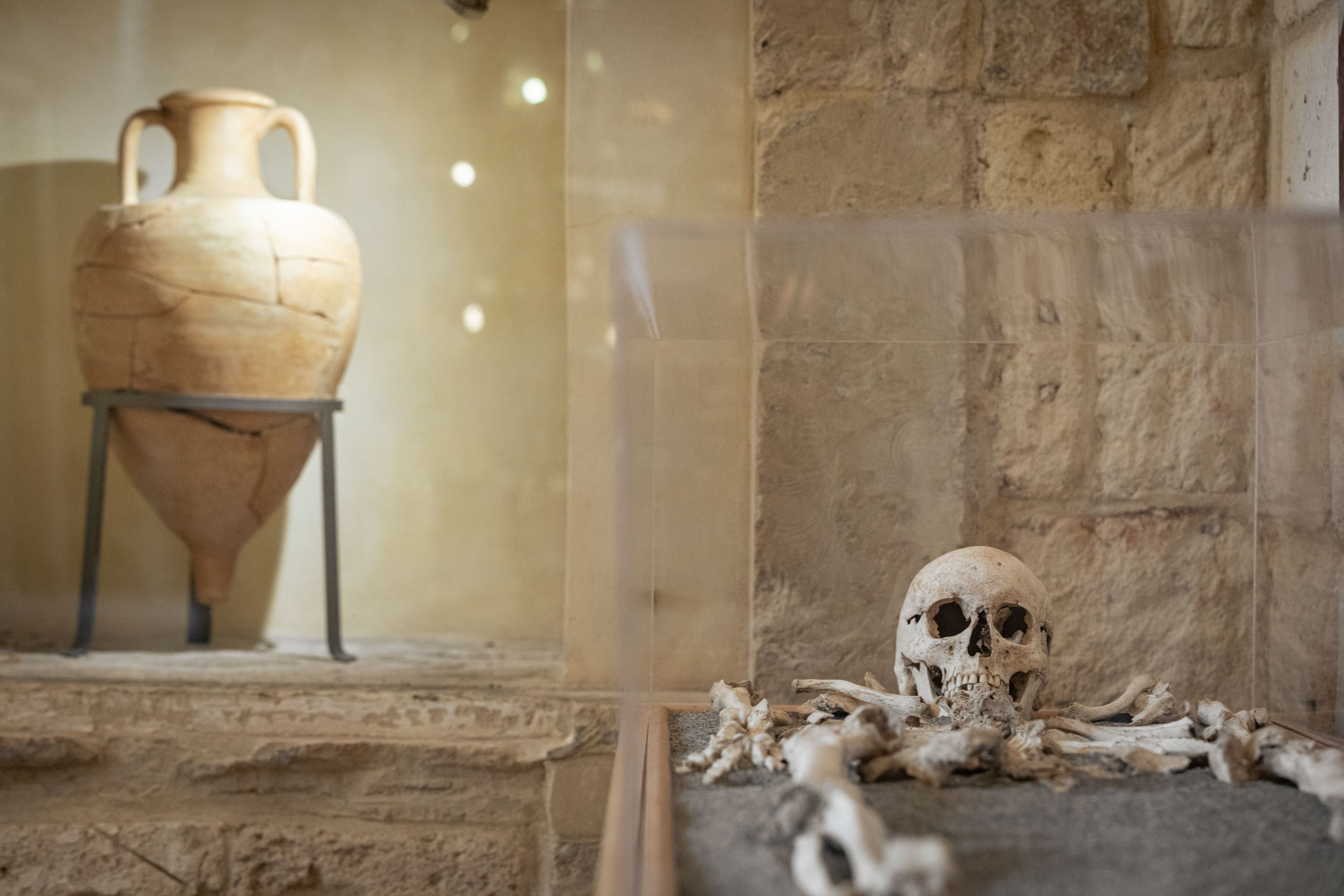
Then the story becomes dramatic. In a display case lies the skeleton of a Messapian citizen, killed during the siege of the 3rd century BC and hastily buried, in a grave too small for him, among the houses of Cunella: the most human face of the end of a city.
The second itinerary, instead, descends into the Middle Ages. It reveals how, in the mid-15th century, the hamlets scattered across the countryside — of which, among them all, the Byzantine church of Santa Marina and the Church of Santa Maria di Miggiano remain as witnesses — gathered into a new and planned settlement, the walled Terra, born between the Turkish threat and the advance of the olive groves.
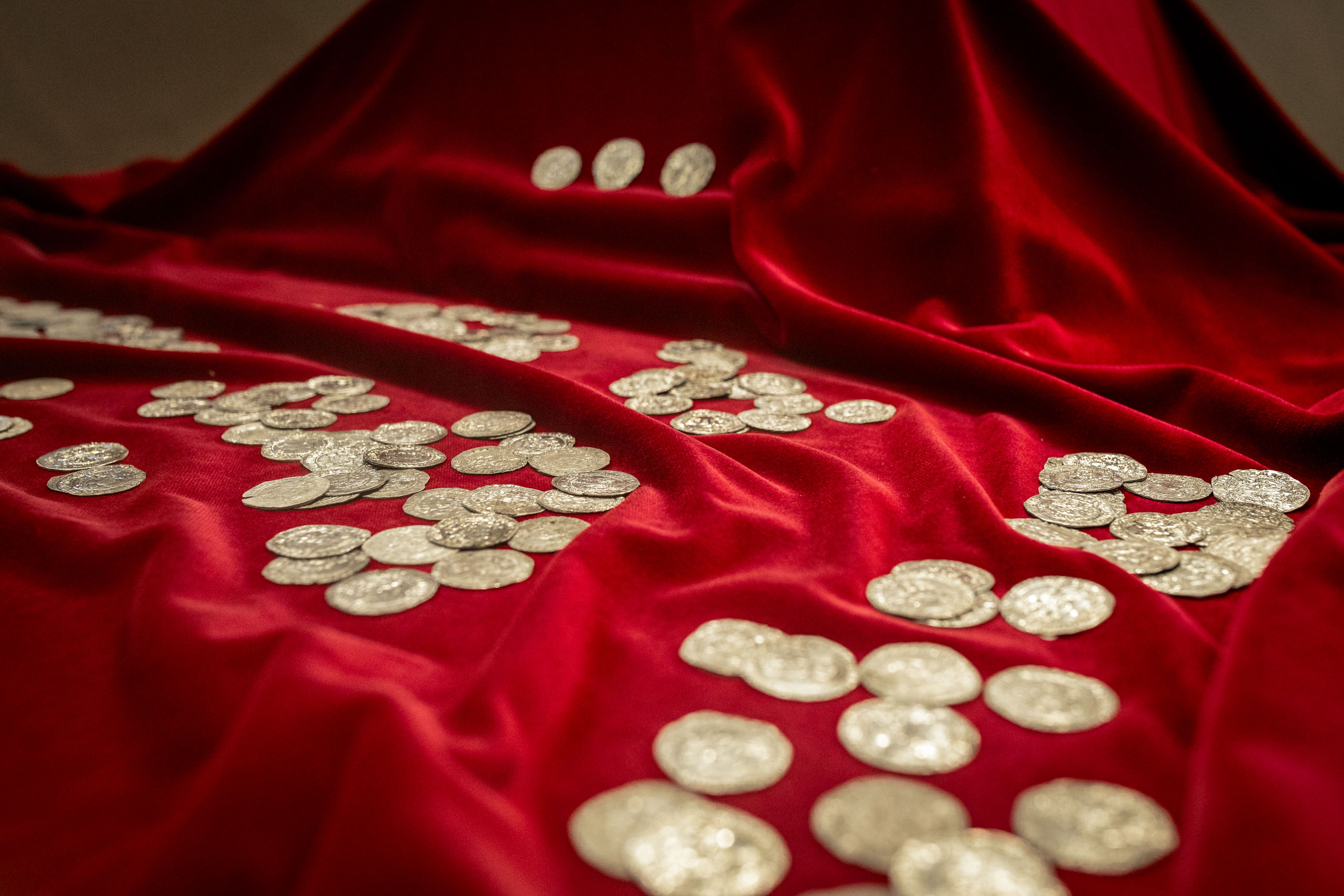
You stop before the display case dedicated to the pastoral visit of 1540, which tells of a community still poised between the Greek rite and the Latin rite; a little further on, among the ceramics, you witness the birth of objects we still use today, when the individual plate appears beside the communal bowl. The Casa Fiorentino room brings back life inside the Terra — terraced houses, grain silos, women’s weaving and, as an archaeological surprise, the oldest turkey bones in Italy — while a small hoard of more than two hundred silver coins, hidden in the 15th century, preserves the echo of a distant fear and of trade routes that reached as far as Greece.
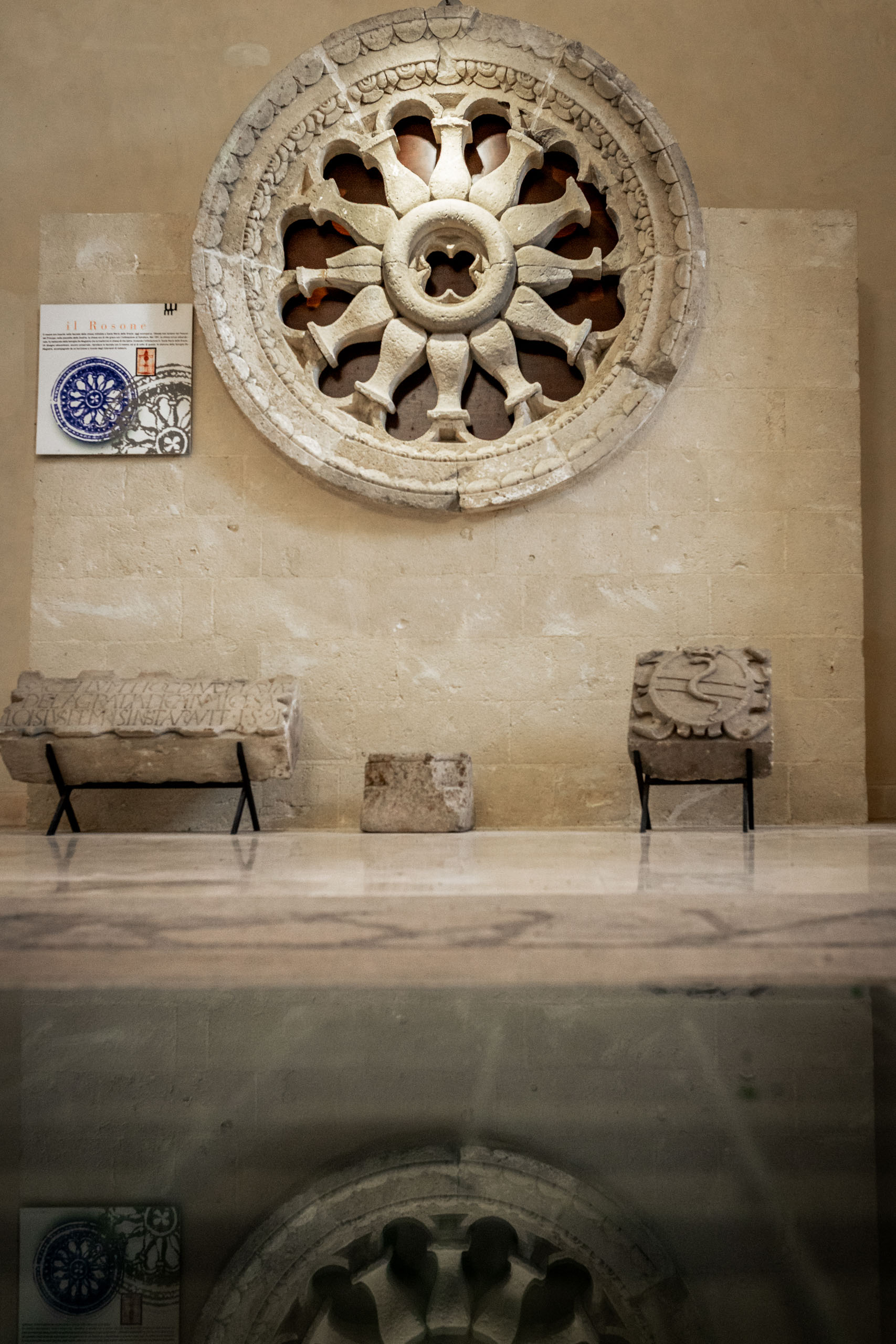
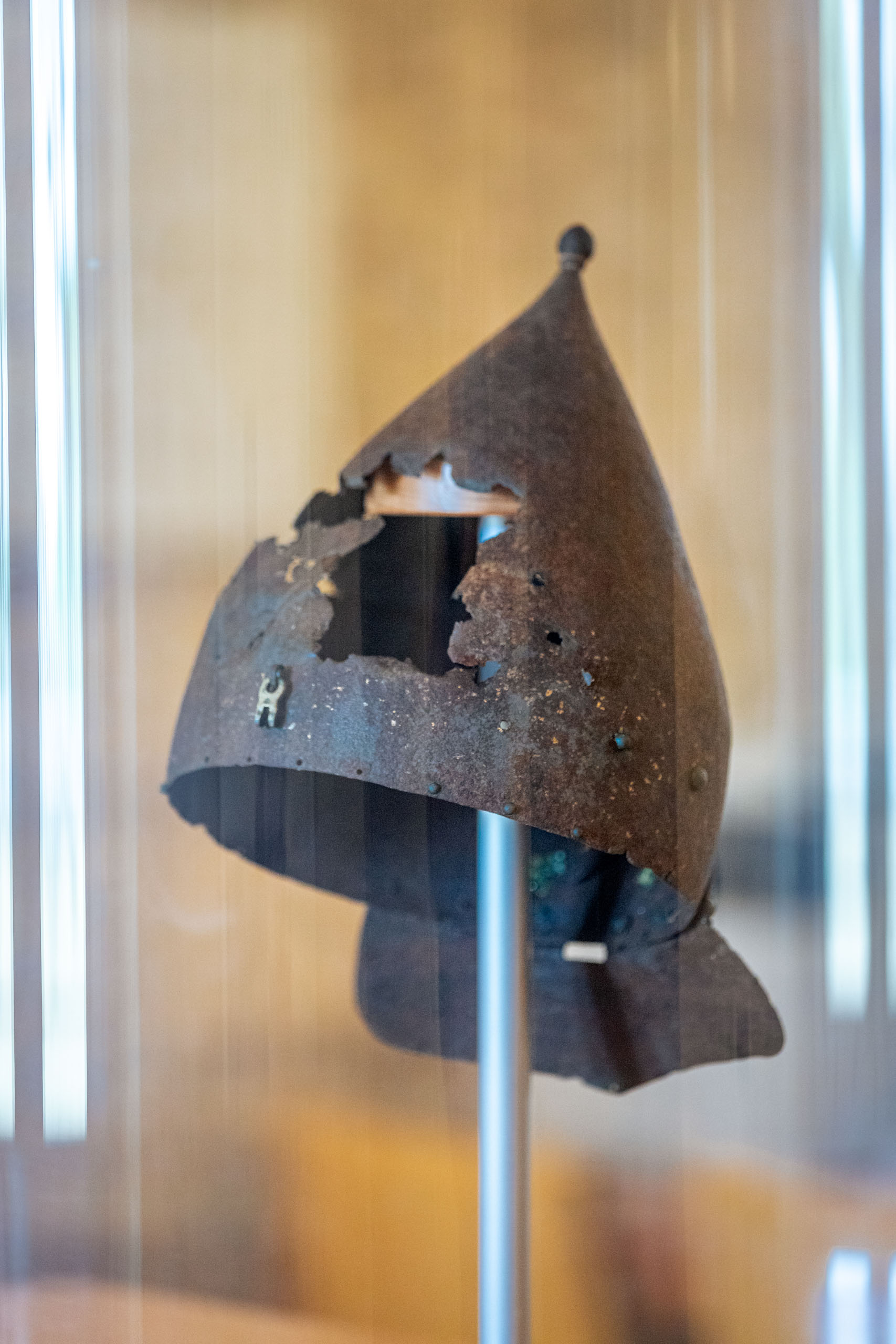
The final section looks out onto the Mediterranean, a space shaped by both fear and exchange. The capture of Otranto in 1480 and the victory of Lepanto in 1571 re-emerge, together with the refined Iznik ceramics that reached the palace itself and, above all, the rare Ottoman helmet produced around 1500 in the foundries of Istanbul and preserved to the present day.
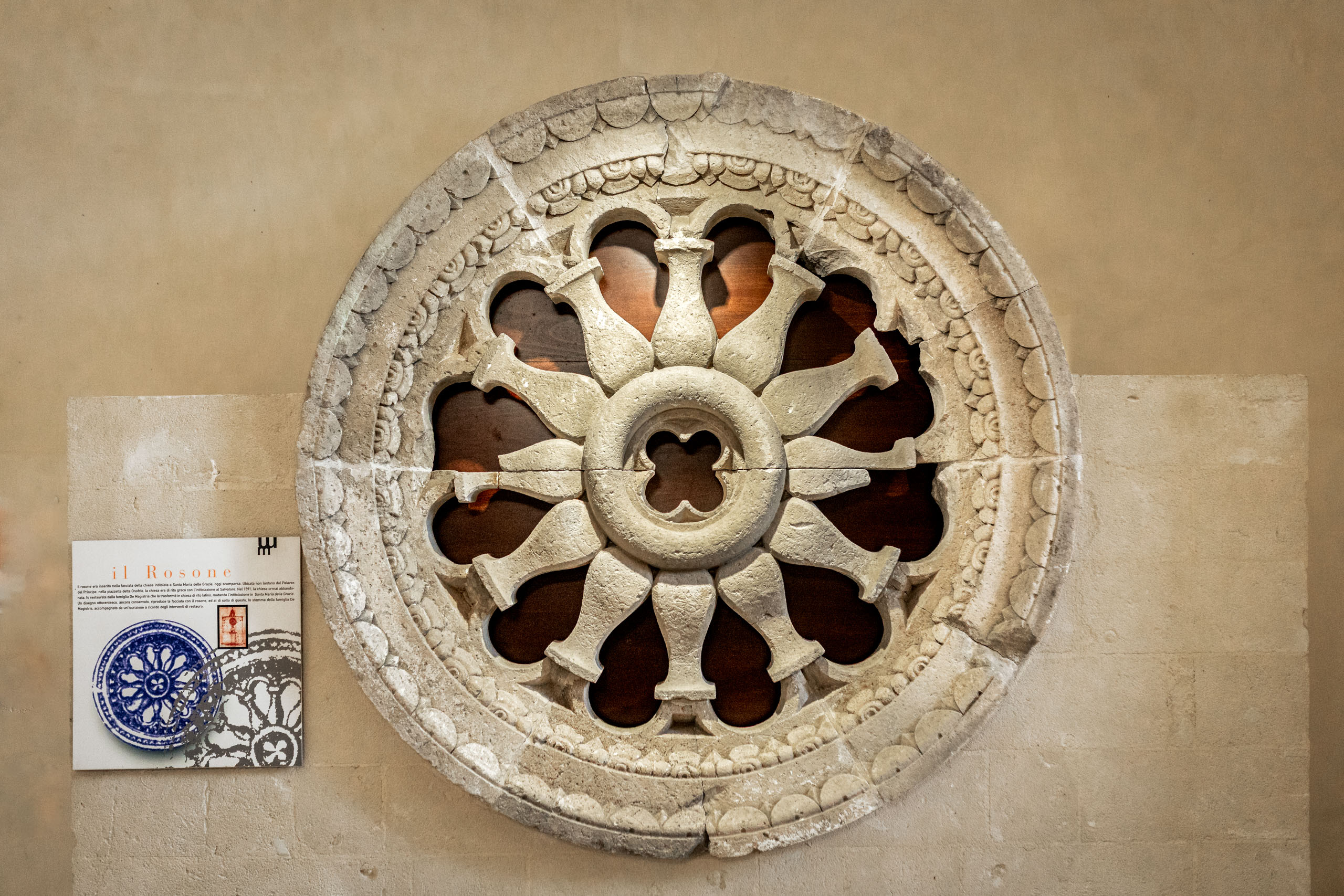
In just a few rooms, the Museum reconnects more than a thousand years of history, and from here the narrative spreads back across the territory: each room is a key to reading what you encounter outside, among the walls, churches and country paths. Visiting it means learning to recognize Muro Leccese, and discovering that its history does not end at the threshold of the museum: it begins again, just outside.