Protonobilissimo hypogeal olive oil press
Semi-underground oil mill
Rural and productive architecture in Lecce stone
By 1602
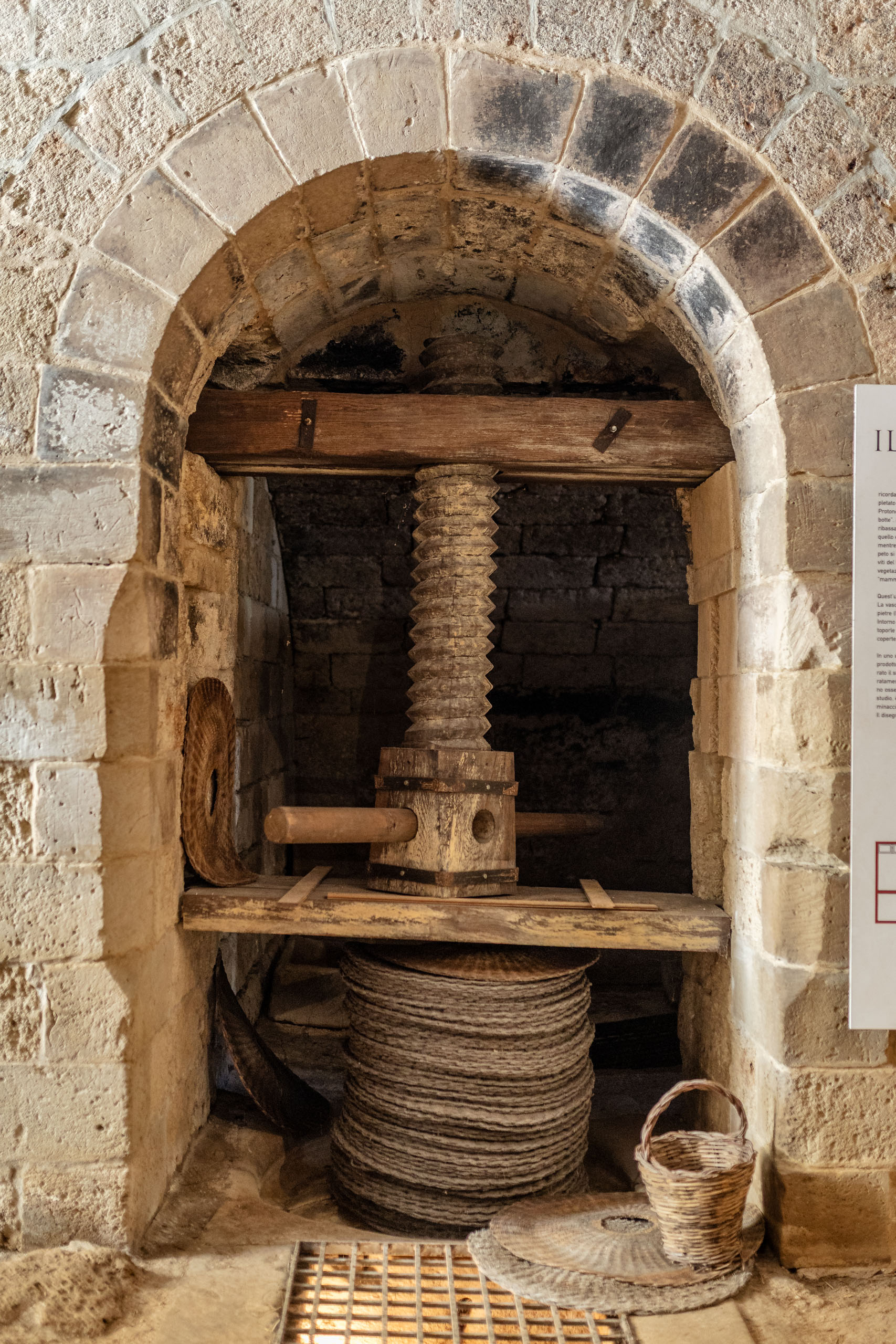
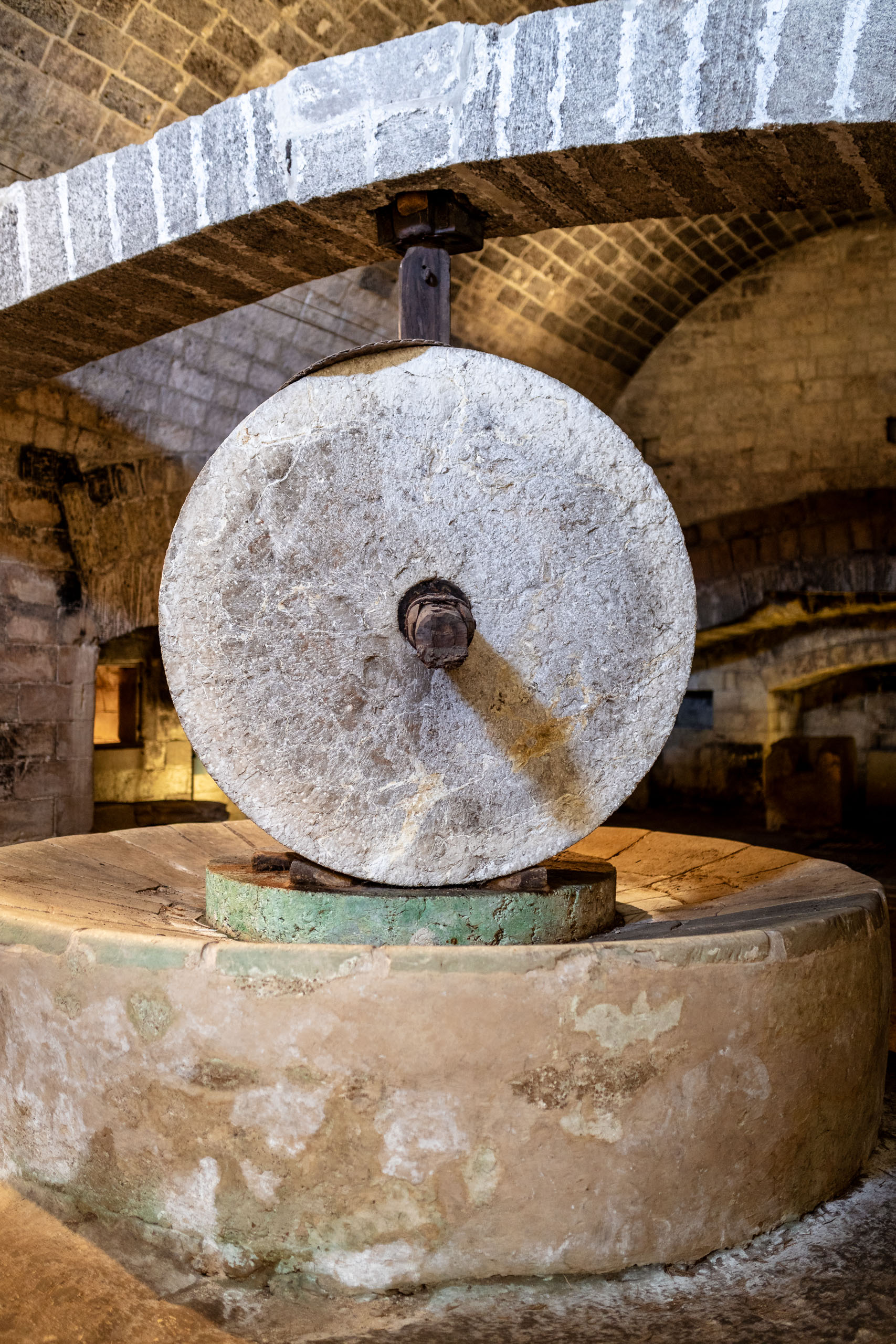
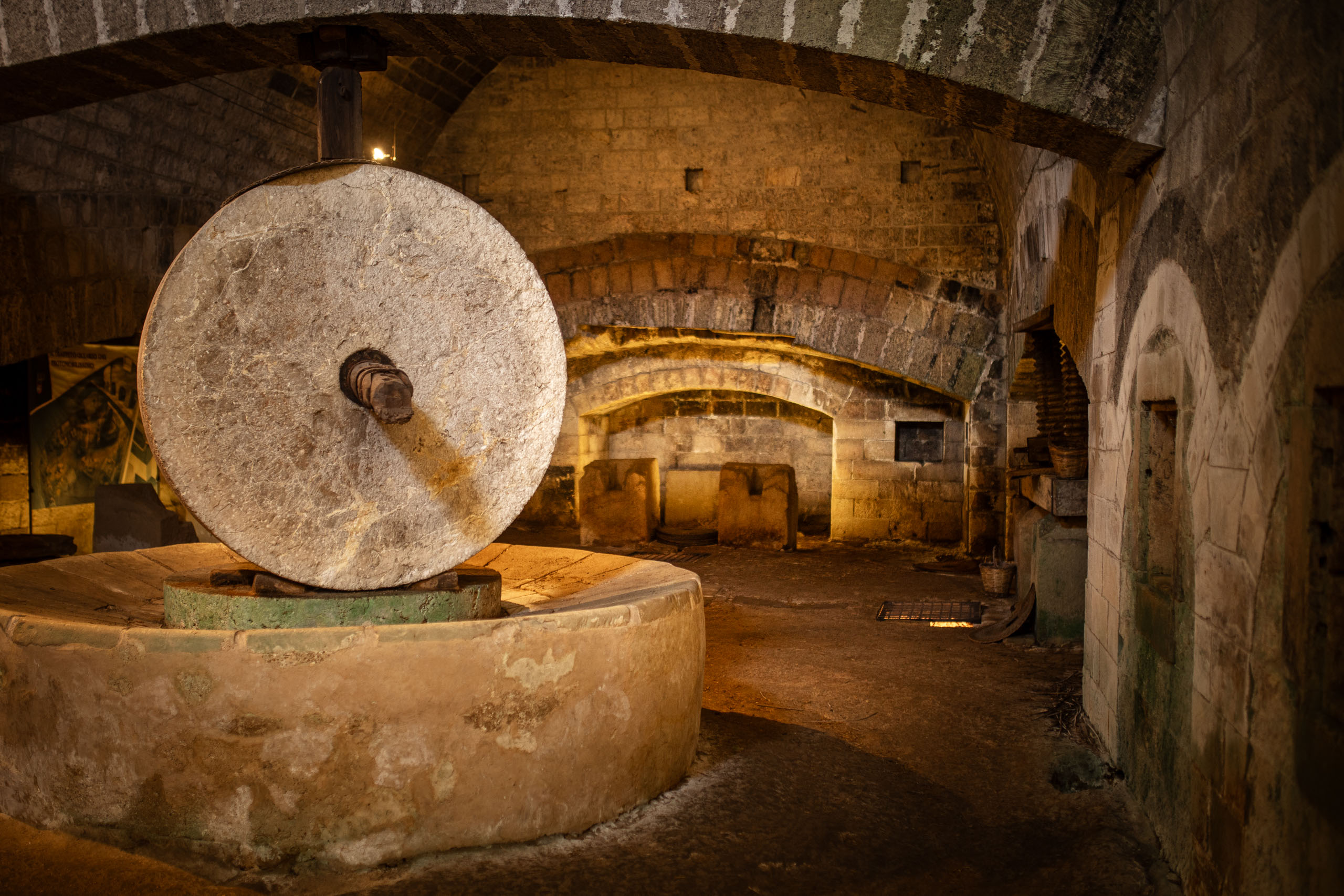
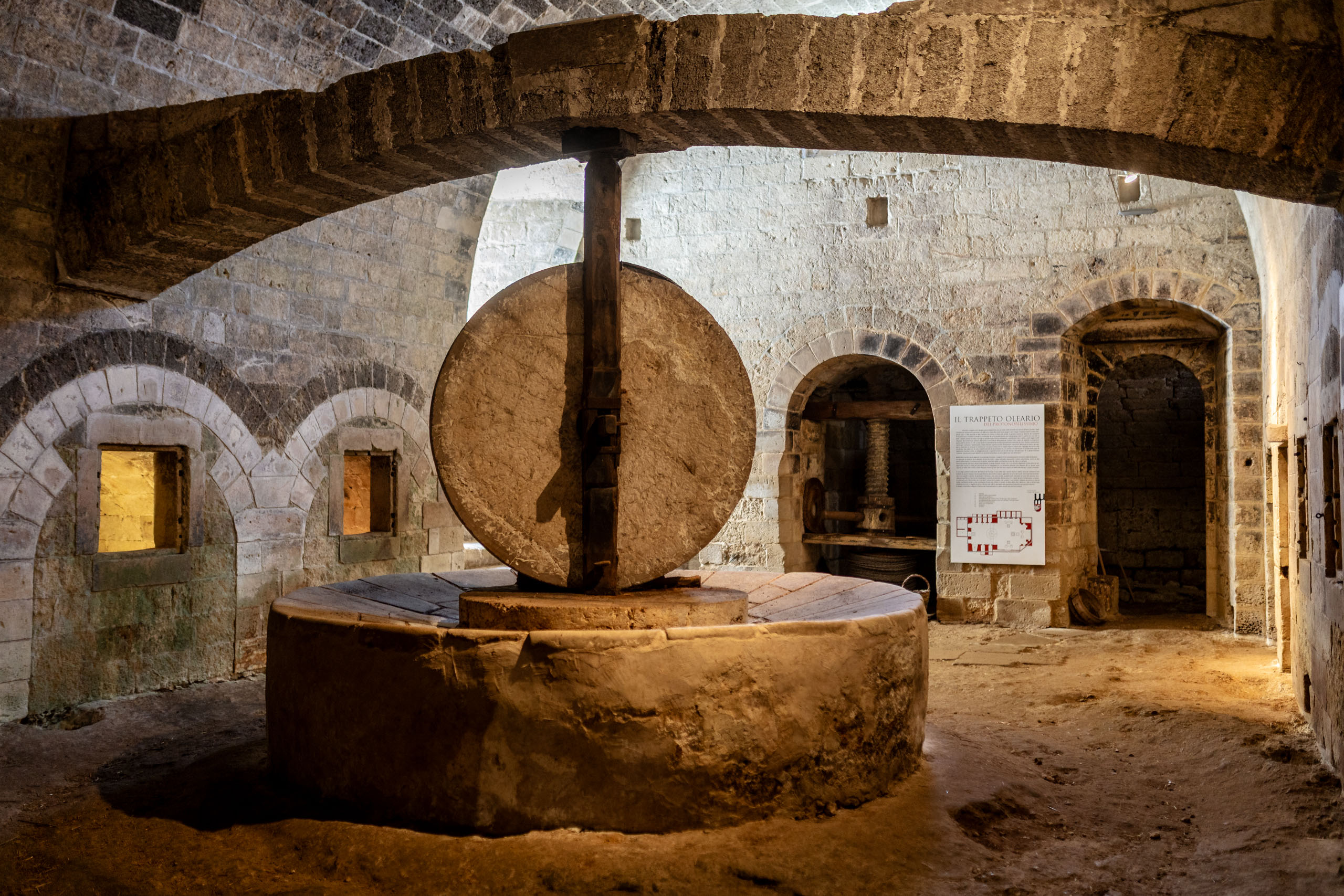
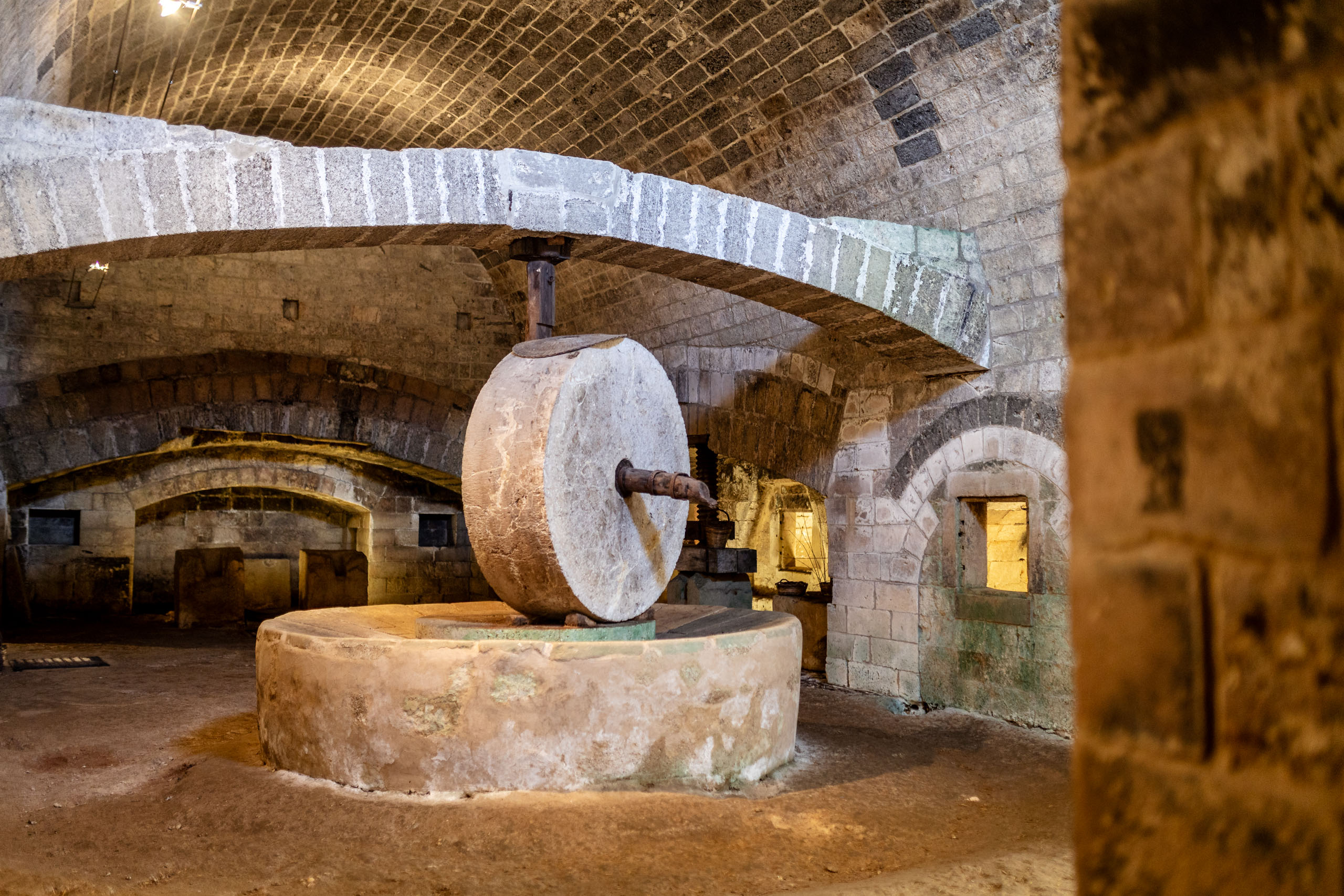
The imposing millstone in the center, "Calabrese" presses, and a "Genoese" press. A graffito depicting a fleet arriving in the port of Messina recalls the gathering of the Sacred League before the Battle of Lepanto in 1571.
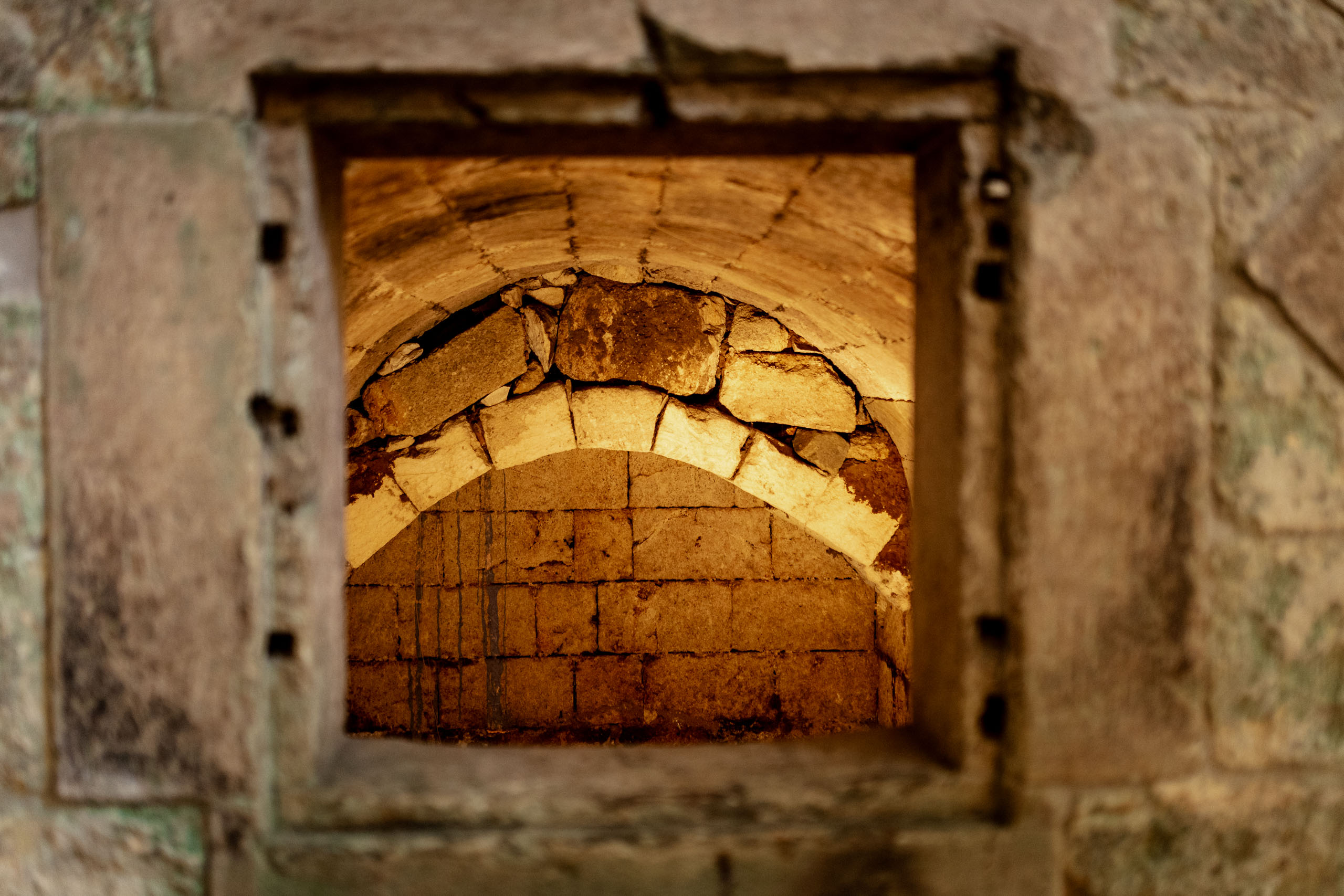
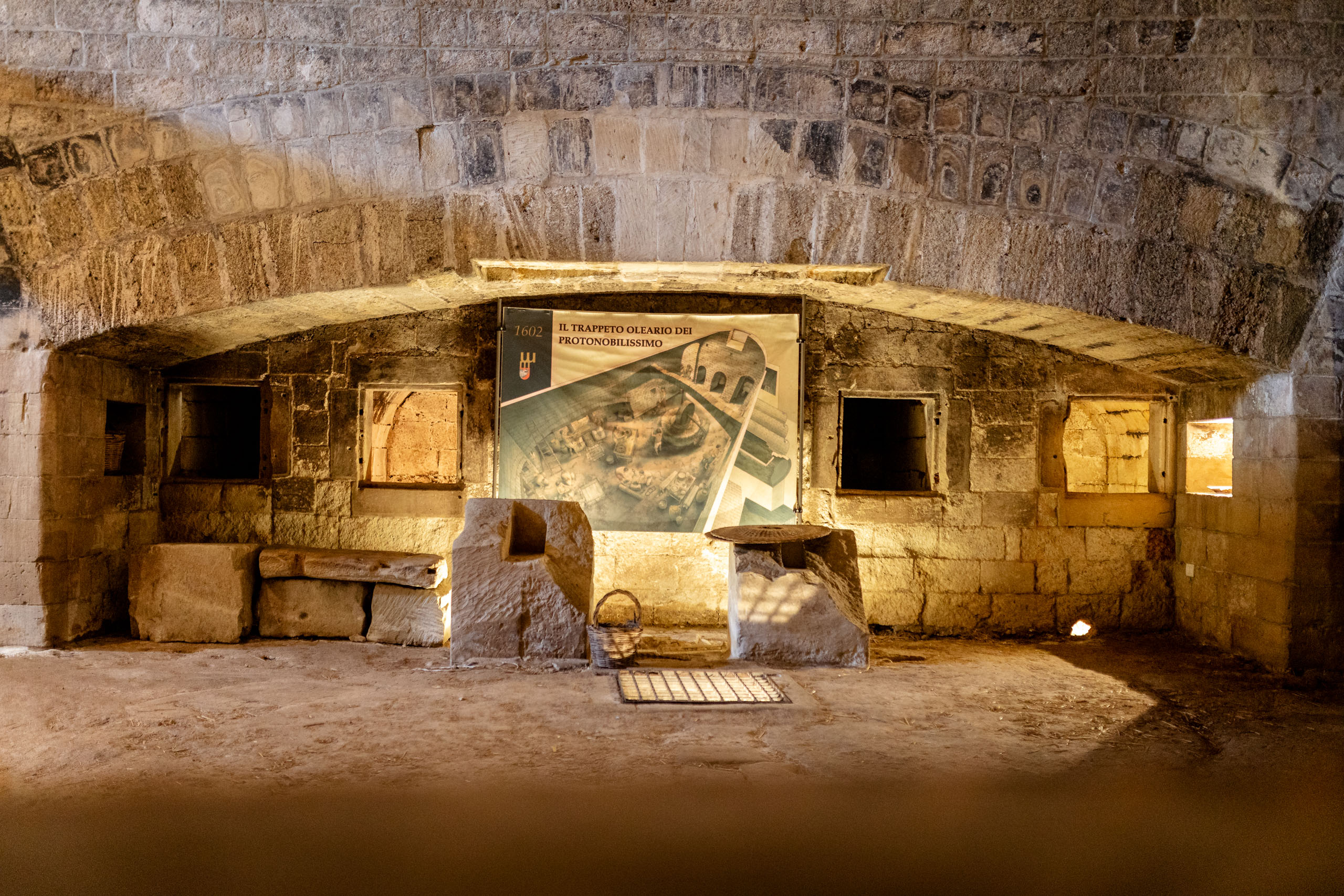
In the heart of Muro Leccese, a few steps from the Protonobilissimo Palace, the hypogeal olive press is not simply a place to visit: it is a threshold leading into the deepest memory of Salento. Down here, time seems to stand still. And yet, for centuries, everything was movement: men, mules, presses, voices, toil. This semi-hypogeal oil press was built by 1602, as testified by the keystone on the entrance portal, which bears the coat of arms of the Protonobilissimo. But it was not merely a place of production: it was an underground world, a small city carved from bare stone, inhabited for months at a time by men who lived almost without ever seeing the light of the sun.
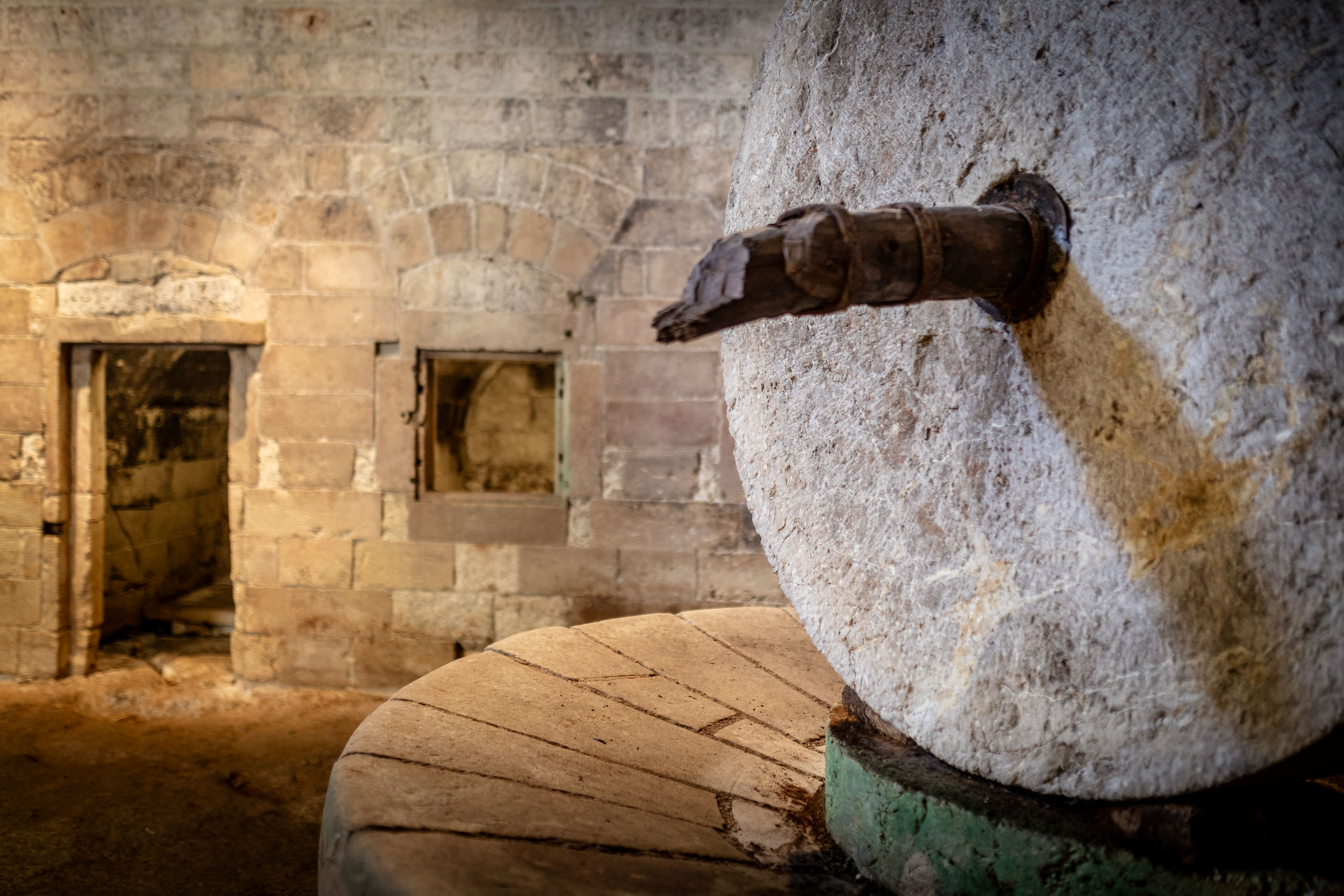
At the centre of the space, the great millstone basin is still preserved.
Imagine it in motion, drawn slowly by blindfolded mules turning for hours in the dark, crushing
olives until they became a dense and fragrant paste. Around the perimeter of the frantoio, the
limestone bases of the "Calabrian-style" presses survive alongside the great "Genoese-style"
press, known affectionately as "mamma", used for the first pressing of the olives, the most
precious.
But the fascination of this place does not lie only in its structures. It lies in the stories it holds. Down here, the trappitari used to live: seamen who would become oil workers in winter. They were sailors, helmsmen and fishermen who, when the Mediterranean would become too dangerous to cross, descended into the hypogeal frantoio to work until spring. The ship's helmsman became the "nachiro", the head of the underground crew. And the word "ciurma" (crew) was no accident: the frantoio truly functioned like a ship in the belly of the earth, with its own rhythms, its own hierarchies, its own shared toil. From November to May, their lives passed almost entirely underground. They slept beside the presses, ate there, and worked without pause in punishing shifts. Even the principle of the "warm bunk" applied: when a worker finished his shift, he took the place in the bed just vacated by a companion who was returning to work. Twelve consecutive hours in the dark, in the acrid smell of crushed olives, in the unceasing sound of the millstone. Only during festivals could they return to the open air and see the sun again.
And yet from this toil came an extraordinary wealth. The oil produced in the oil presses of Salento crossed the Mediterranean and reached distant cities: London, Paris, Amsterdam, even northern Europe. It was the "green gold" of Salento, used above all as lamp oil to illuminate the great cities of Europe and for the production of soap. The price was set in Gallipoli, one of the most important commercial ports in the Mediterranean, and from there, ships laden with barrels departed for the rest of the world.
But this frantoio also keeps another story, more mysterious and unsettling. Along the western wall, carved directly into the limestone blocks, there is a remarkable series of rock carvings. At first glance, they appear to represent a simple maritime scene, but looking more closely, surprising details emerge: a fleet arriving at a port, a walled city, a flag bearing the word "MISSINIA", and beside it, a skeletal figure clutching what may be a scythe – a personification of death. That name, "MISSINIA", points to the city of Messina, where in 1571 the fleet of the Holy League gathered before the Battle of Lepanto against the Ottomans. It is likely that whoever carved this scene had truly witnessed those ships, or had listened to the stories of those who had. For the people of Salento, still marked by the trauma of the fall of Otranto and the massacre of the 800 Martyrs in 1480, those images must have evoked fear, memory and hope in equal measure. Turkish raids were a real and present threat in the daily life of coastal communities. And so, even in the belly of an olive press, the great fears and great events of the Mediterranean resurfaced.
And then there are the legends. Wonderful ones. The hypogeal frantoi were not made only of men and labour: it was said that they were also inhabited by the "uri”, mysterious creatures, mischievous spirits that dwelt underground and tormented the trappitari. Figures suspended between superstition and popular imagination, born perhaps of solitude, exhaustion and the long days spent without natural light.
Today, the frantoio of Muro Leccese continues to tell all of this. It tells the story of a hardworking Mediterranean Salento, capable of engaging with the world through the trade in oil. It tells the harsh lives of the trappitari, men suspended between sea and subterranean darkness. It tells collective fears, commerce, journeys, superstitions, memories of war and of the sea. And as you walk through the half-light of these chambers carved from rock, you can almost still hear the creaking of the presses, the slow tread of the mules, the voices of the crew. Because this is not simply an olive press. It is the underground heart of our land.