Archaeological park of the messapian walls
Archaeological park / Urban defensive system
Messapian military architecture (archaic and Hellenistic
First wall by the end of the 6th century BC; monumentalization in the Hellenistic age (4th-3rd century BC)
The walls enclosed an area of approximately 100 hectares, depicting the scale of one of the most important pre-Roman centers in Puglia. The circuit is punctuated by several city gates, including the Northwest Gate, crossed by a road still marked by deep cart tracks and featuring a round arch dating to the last quarter of the 4th century BC, one of the oldest known attestations from a closed stratigraphic context. Catapult projectiles and traces of the siege that marked the end of the city in the 3rd century BC have been found along the walls. The areas of Sitrie, Cunella, and Palombara also reveal the residential and social dimension of the city, with large elite residences, production areas, and anomalous deposits related to the final war events.
Long before the construction of Borgo Terra, Piazza del Popolo or the Prince's Palace, there was one of the most important cities of Messapia here. Its history began between the 8th and 6th centuries BC, when the settlement was still composed of scattered clusters of huts. Then, something changed. The community grew, organised itself and acquired a new self-awareness. At the end of the 6th century BC, the first walls appeared. These were not simple defensive works, but the tangible sign of the birth of a true city that came to cover around one hundred hectares - an extraordinary size for the era, placing Muro Leccese among the principal centres of the Messapian civilisation.
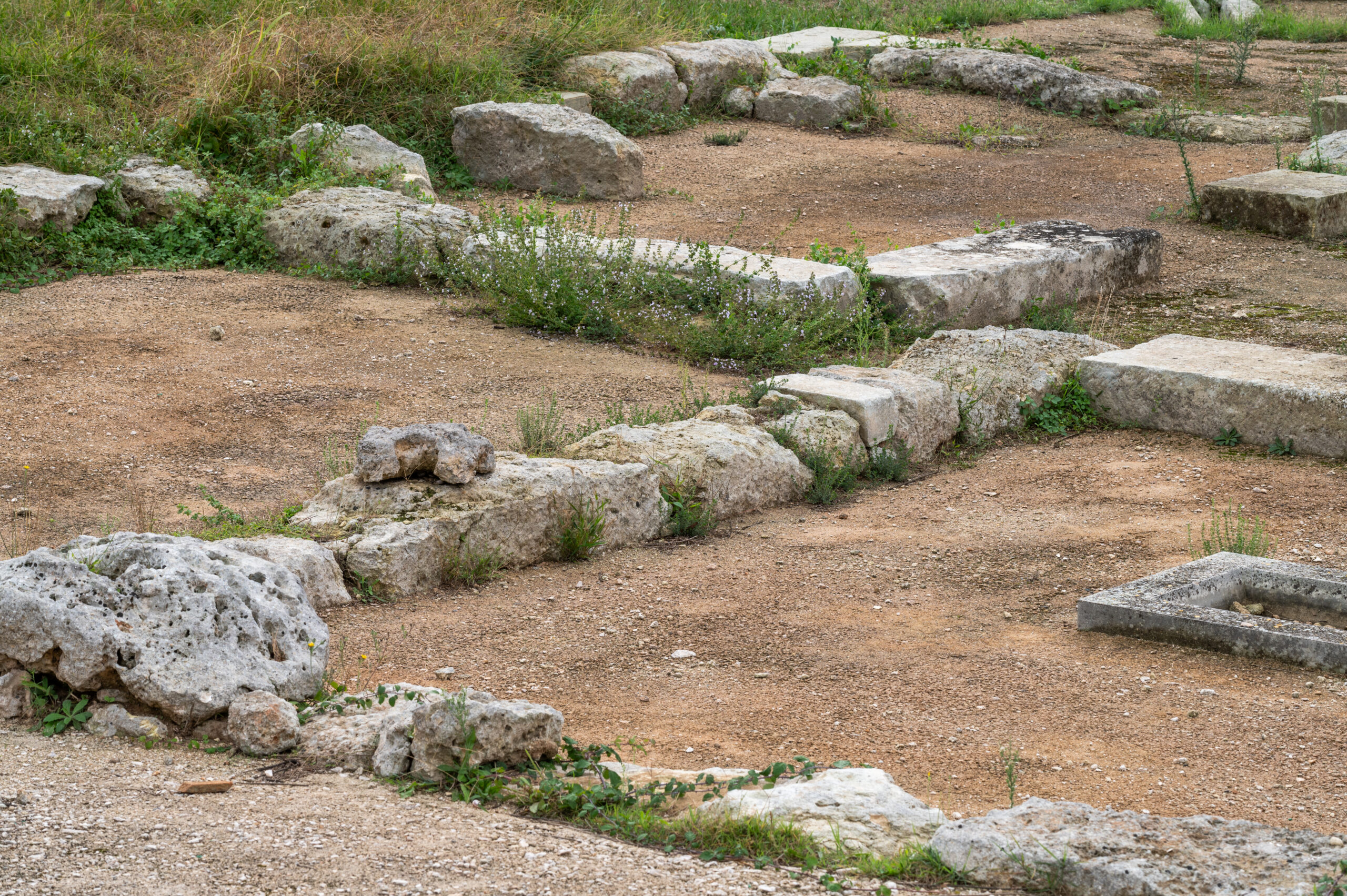
Today, the park allows you to read that history directly on the ground. The walls emerging
amidst the vegetation are not just blocks of stone. They are the boundary of a community, the
evidence of a political vision and the symbol of a city that had learned to organise its space and
control the surrounding territory. During the Hellenistic period, the defensive system was
expanded, reinforced and monumentalized, taking on the mighty appearance that can still be
recognised across various sectors of the park.
Walking along the circuit of the walls, you understand immediately that these fortifications did
not serve merely to protect: the walls defined the very identity of the city.
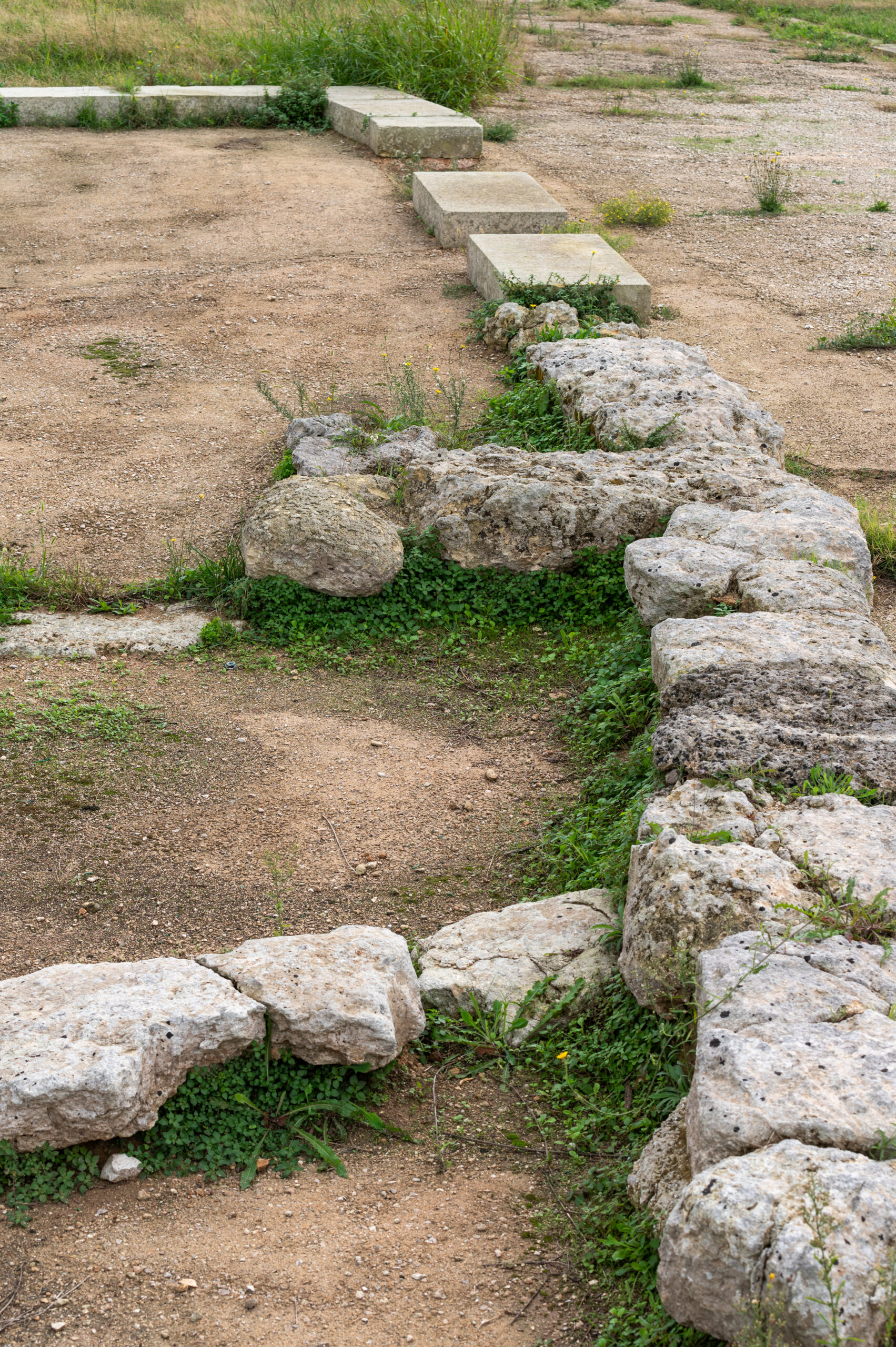
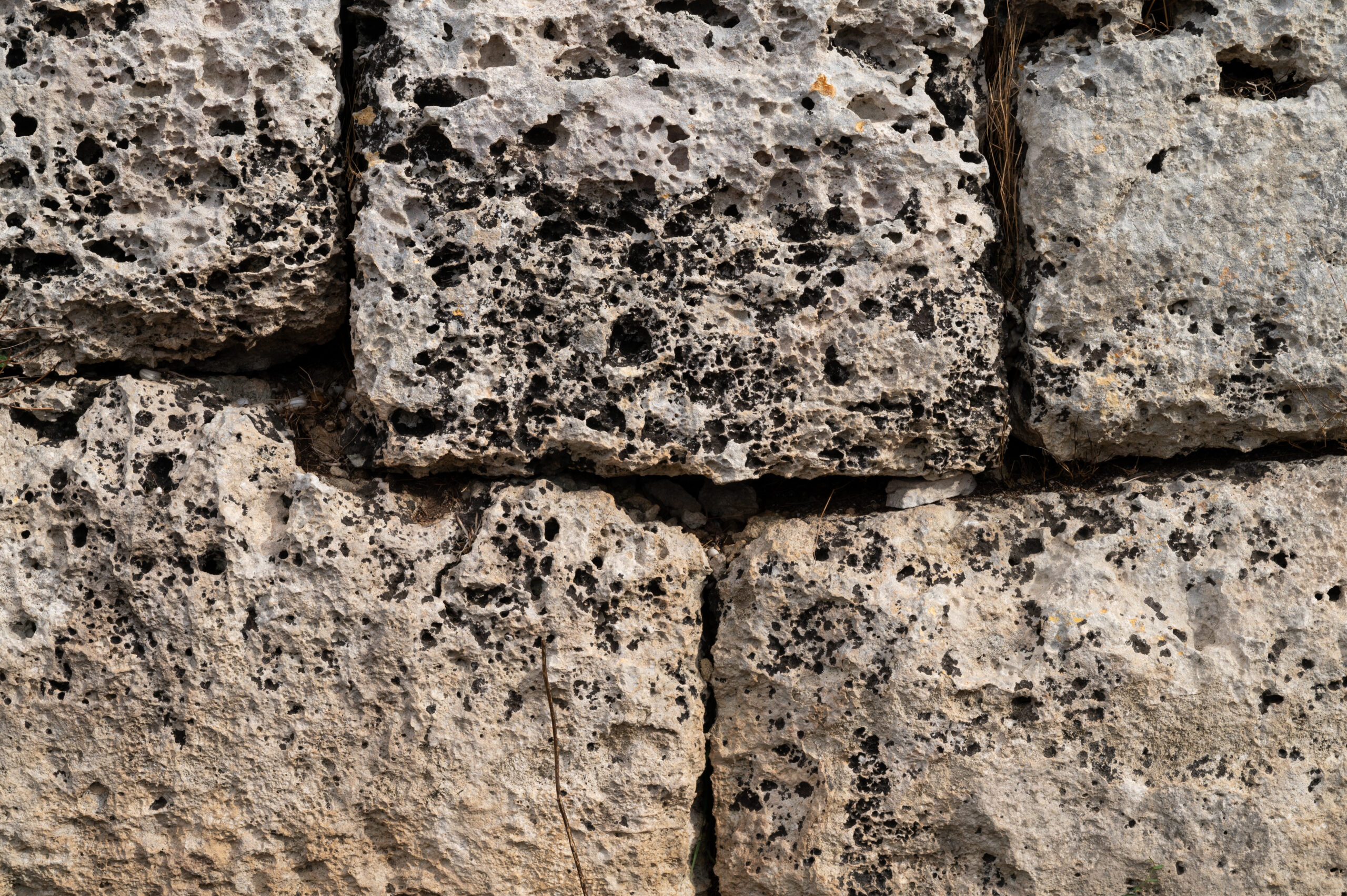
Yet the park also reveals something deeper: the long duration of History. Recent excavations
have identified beneath the Hellenistic walls the remains belonging to the older, Archaic
fortification. It is as if the walls preserve, layered one on top of the other, the different lives of
the city. Every construction phase tells a transformation, growth and a new response to the
challenges of the time.
And yet, every great city eventually meets its twilight. It is precisely along these walls that the
most dramatic evidence of the final days of Messapian city has emerged. Catapult projectiles,
sling bullets, bolts from siege engines, sudden collapses and anomalous burials recount a
ferocious battle that overwhelmed the city in the 3rd century BC. The fortifications that had
guaranteed protection for centuries became the theatre of the final siege. Today, those stones still
retain the memory of violence and resistance.
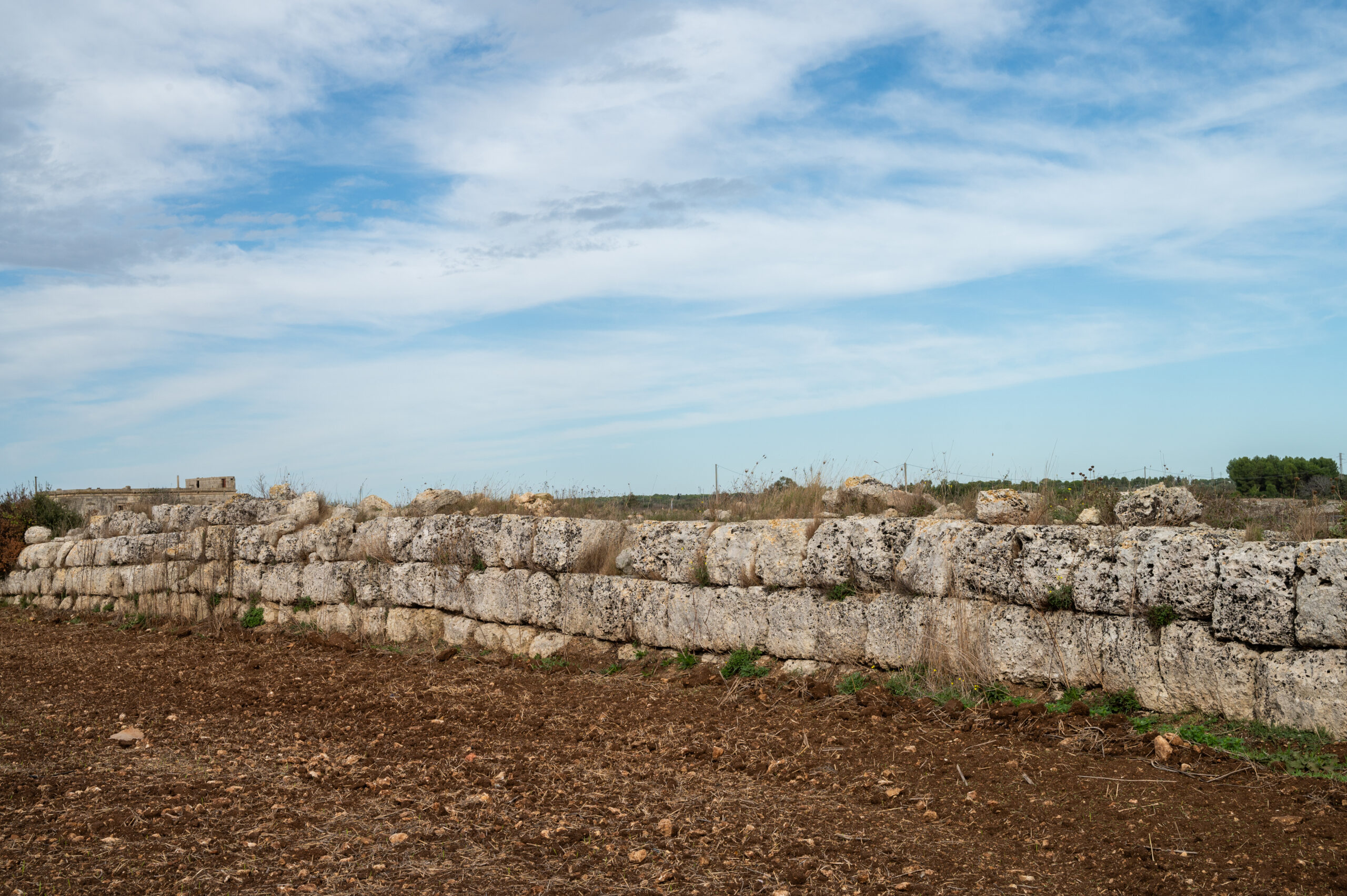
Among the most fascinating locations in the park is the area of Sitrie, the northern sector of the ancient city. Here, the monumentality of the walls appears in all its clarity. Majestic defensive sections, ancient city gates and pathways marked by chariot wheels recall the image of a living, organised city. Research led to the discovery of the Northwest Gate (Porta Nord-Ovest), crossed by a road carved directly into the bedrock. You can still observe the deep ruts left by the continuous passage of people, animals and goods.
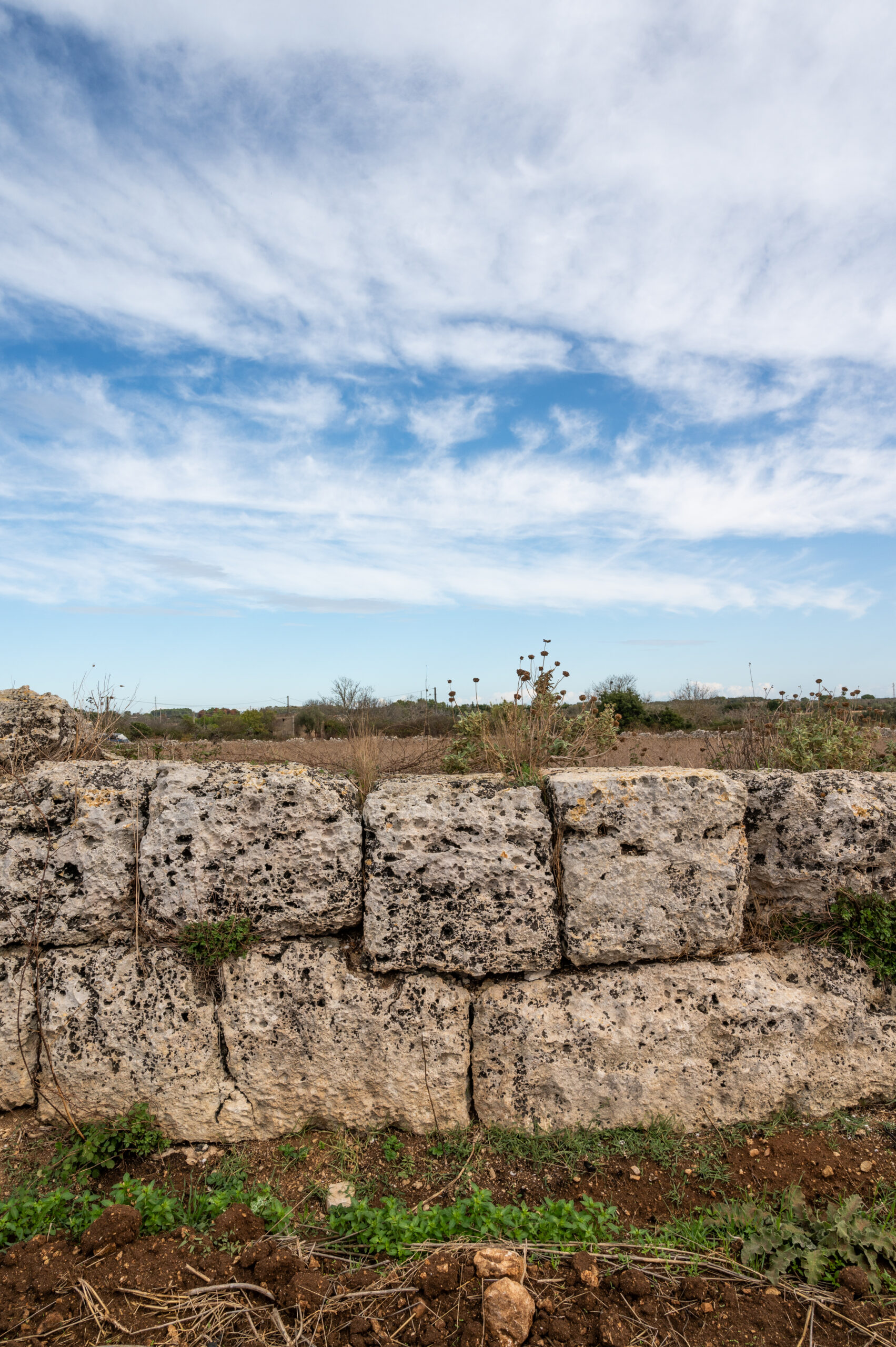
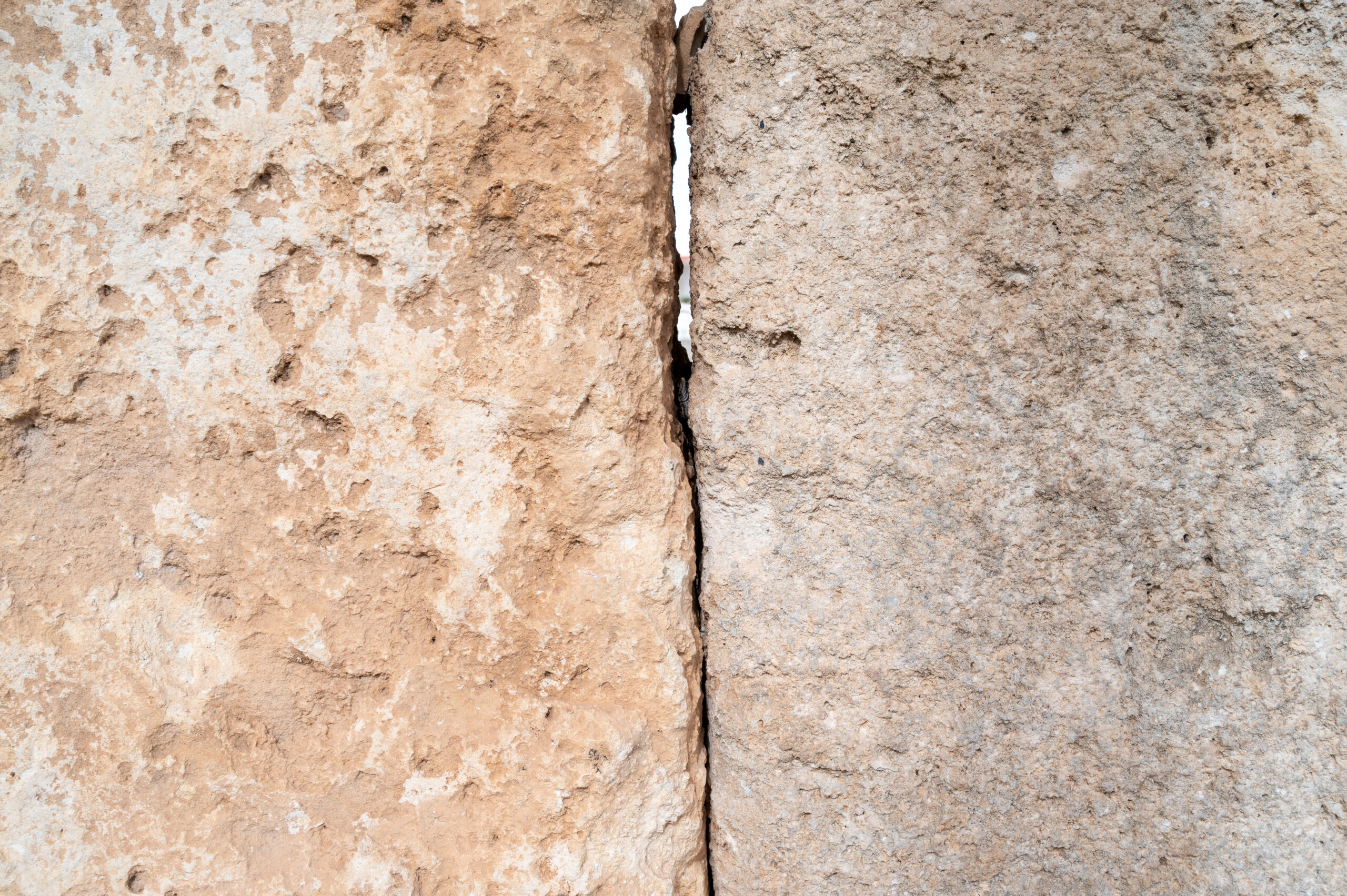
Right here, one of the most surprising discoveries of the entire site has come to light: blocks belonging to an arched roof datable to the last quarter of the 4th century BC. Based on current knowledge, this is considered one of the oldest documentations of a semi-circular arch discovered within a sealed stratigraphic context.
While Sitrie illustrates the city through its defences, the areas of Cunella and Palombara allow us
to step into the heart of daily life. Archaeological investigations have brought to light residential
quarters, aristocratic homes, production areas, wells, cisterns, kilns and spaces dedicated to
worship. At Cunella, a large residential building of over eight hundred square meters was
identified, an expression of the elites who led the community. At Palombara, a noble residence of
about one thousand three hundred square meters emerged, around which developed
manufacturing activities, livestock enclosures, places of worship and spaces intended for
resource management.
Archaeologists have unearthed architectural decorations of Tarentine production, evidence of the
cultural and commercial relationships connecting Muro Leccese to the major centres of Magna
Graecia. They found traces of rituals linked to water and chthonic cults, signs of a profound
religiosity that accompanied the community's life. And once again, alongside life, the memory of
destruction appears. Skeletons deposited haphazardly, collapsed rooms and signs of emergency
and combat bring back to mind the final dramatic moments of the city.
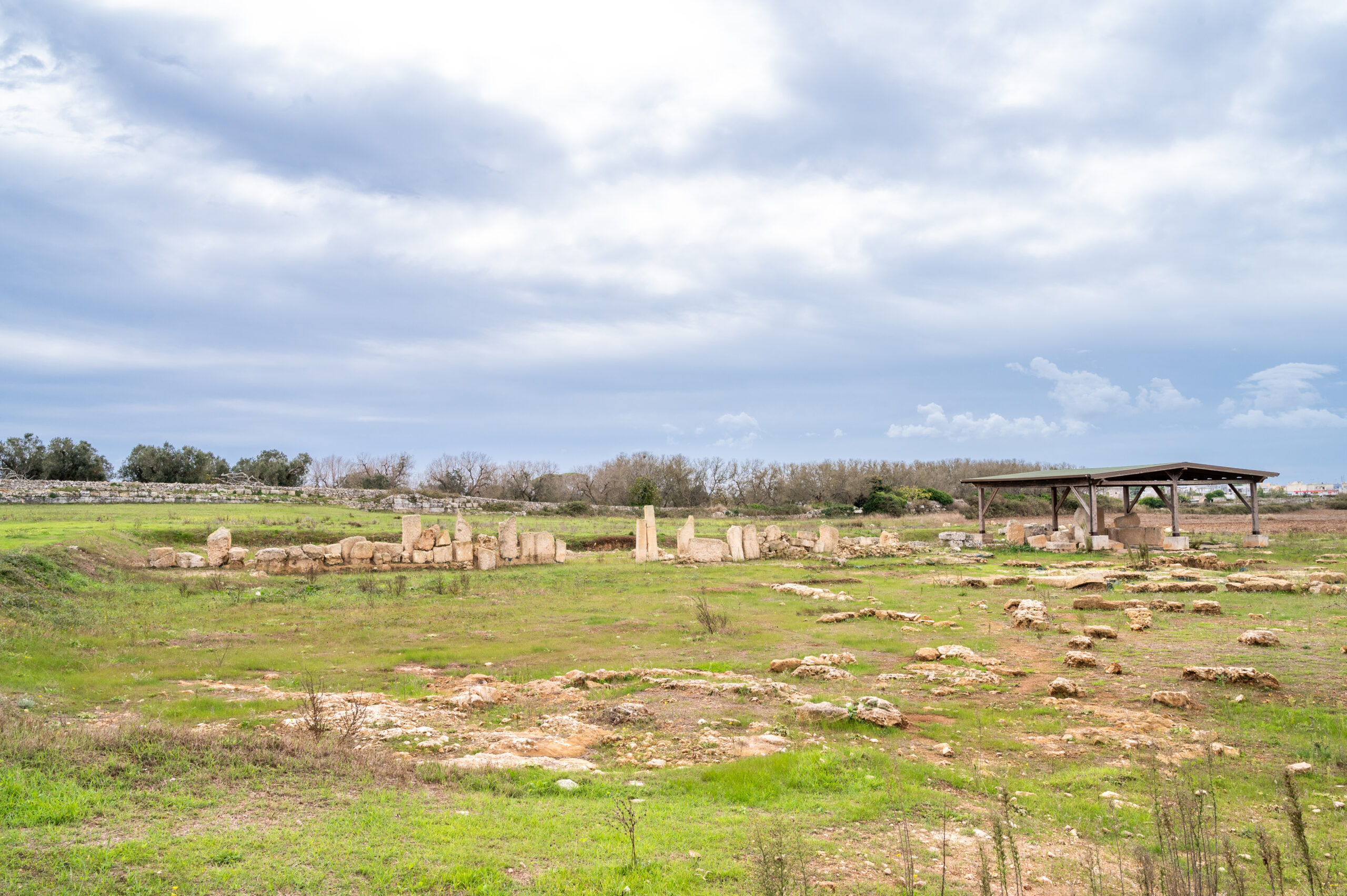
Visiting the Archaeological Park of the Messapian Walls today means traversing all these stories
together, observing the birth and the growth of a city, understanding its complexity and
witnessing its downfall.
Because in this place, you do not just encounter ruins. You encounter a city. And, in some way,
its soul continues to live on among the stones.