Church of Santa Maria di Miggiano
Medieval rural church
Byzantine style with Gothic openings and modern interventions
Not defined with certainty; decorations between the late 13th and 14th centuries; side access dated 1705-1711
The walls preserve a valuable pictorial palimpsest, including Greek inscriptions, references to the liturgy of Saint John Chrysostom, and a 14th-century Christological cycle, with scenes such as the Entry into Jerusalem, the Last Supper, and the Dormitio Virginis. Also present is the Madonna of Constantinople, dated 1514.
Its history is bound up with Miggianello, a small settlement mentioned in medieval sources, now lost to time. Between the end of the Middle Ages and the beginning of the modern era, the inhabitants of the hamlets gathered within the new Borgo Terra, and in time, most traces of those villages were lost with them. Santa Maria di Miggiano, however, remained. And even today, it still allows us to glimpse that ancient landscape composed of cultivated fields, small clusters of dwellings and places of worship that punctuated the daily life of rural communities.
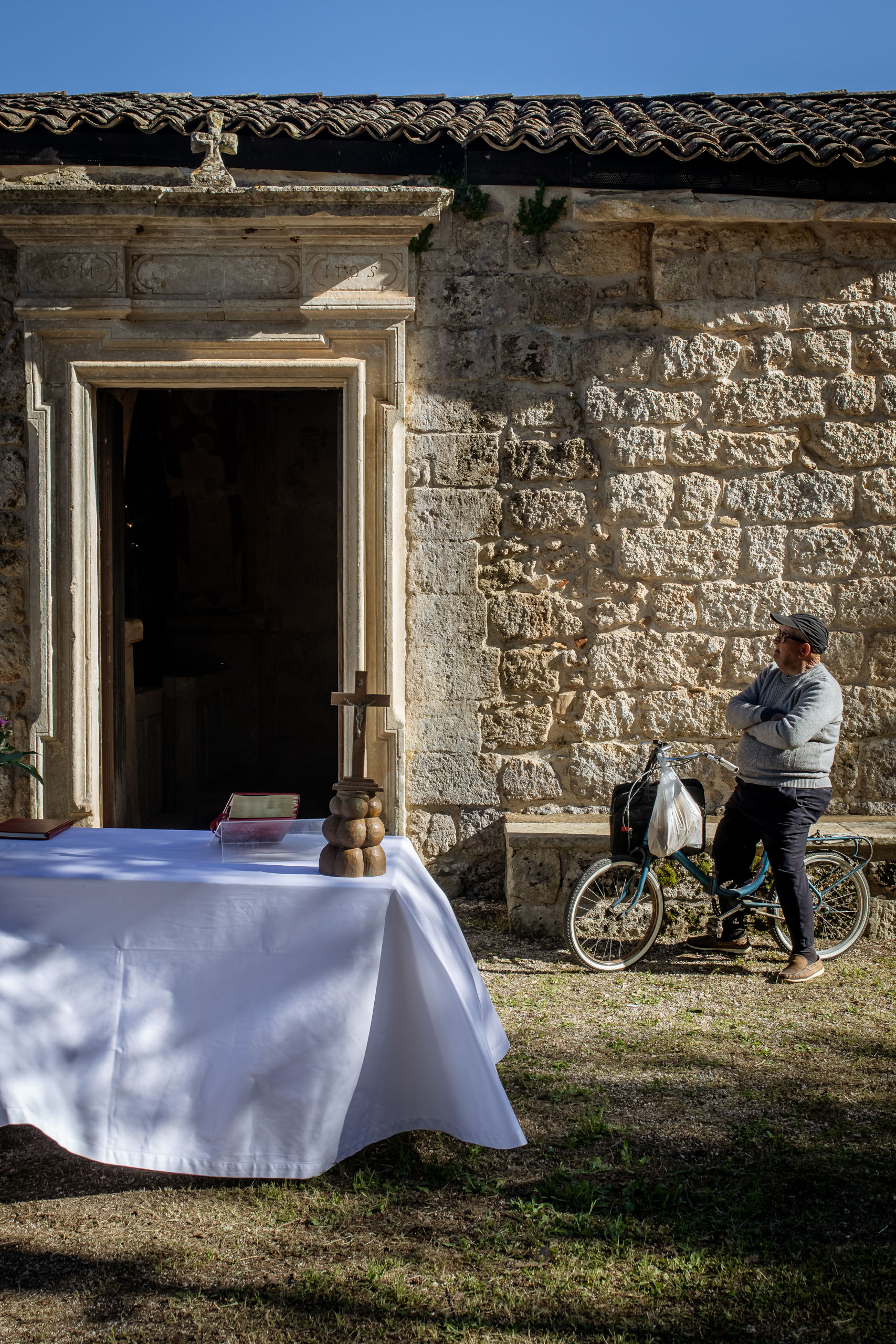
Seen from the outside, the church strikes you with its simplicity. There are no grand façades or spectacular decorative embellishments - and yet, the building conceals an extraordinary richness of meaning. It bears clear echoes of the Byzantine architectural tradition: a rectangular nave oriented from east to west, terminating in a semi-circular apse.
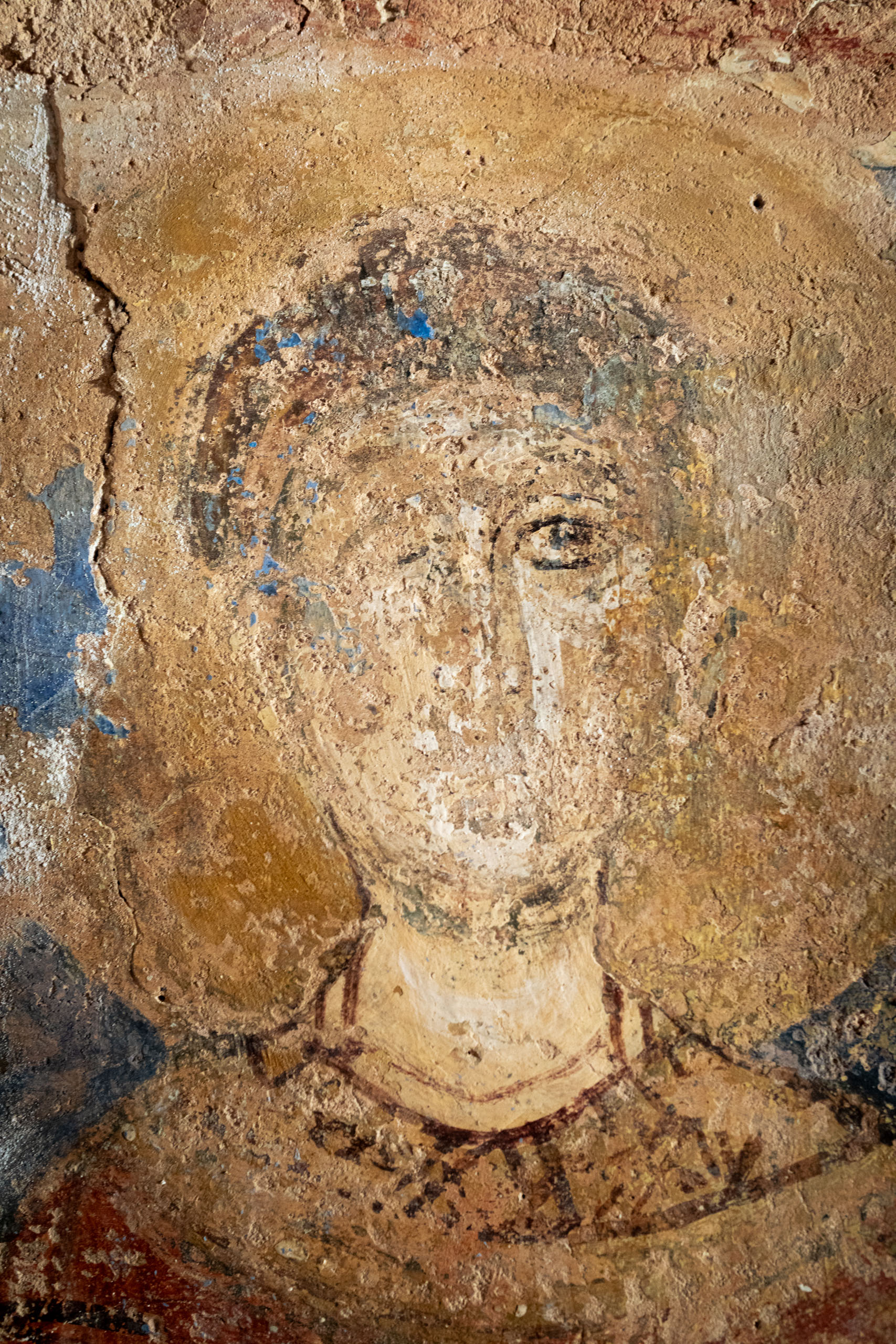
But the treasure of Santa Maria di Miggiano reveals itself upon its walls, which preserve a figurative palimpsest, where images, symbols and devotions have overlapped over time without completely erasing what came before. It is like observing a memory that keeps rewriting itself, while always leaving visible the traces of the past. The oldest paintings date to the late thirteenth and fourteenth centuries and speak of a community still deeply immersed in Byzantine culture. Particularly fascinating is the discovery, beneath the large Madonna of Constantinople in the apse, of earlier frescoes depicting holy bishops, accompanied by texts in Greek and references to the liturgy of St. John Chrysostom.
These are details that speak of a story far broader than the local one. They speak of a
Mediterranean crossed by people, ideas, images and devotions - a Mediterranean in which
Salento was not a periphery, but a crossroads where East and West met, conversed and
transformed one another. Santa Maria di Miggiano still preserves the tangible traces of this
encounter.
During the fourteenth century, the walls were enriched with new images. Scenes from the life of
Christ, episodes from the Gospel and sacred figures appeared, reflecting an openness to the
figurative language of the Gothic West. Today, you can still recognise fragments of the Entry of
Christ into Jerusalem, the Last Supper, the Adoration of the Magi and the evocative Dormition of
the Virgin (Dormitio Virginis). Alongside these scenes appear holy knights, archangels, monks
and hermits, in an unceasing dialogue between Eastern tradition and Western sensibility.
Particularly powerful is the presence of holy monks. From the arches and walls emerge figures
identified by Greek inscriptions as Euthymius and Philaretus, alongside other exemplars of the
Eastern ascetic spirituality.
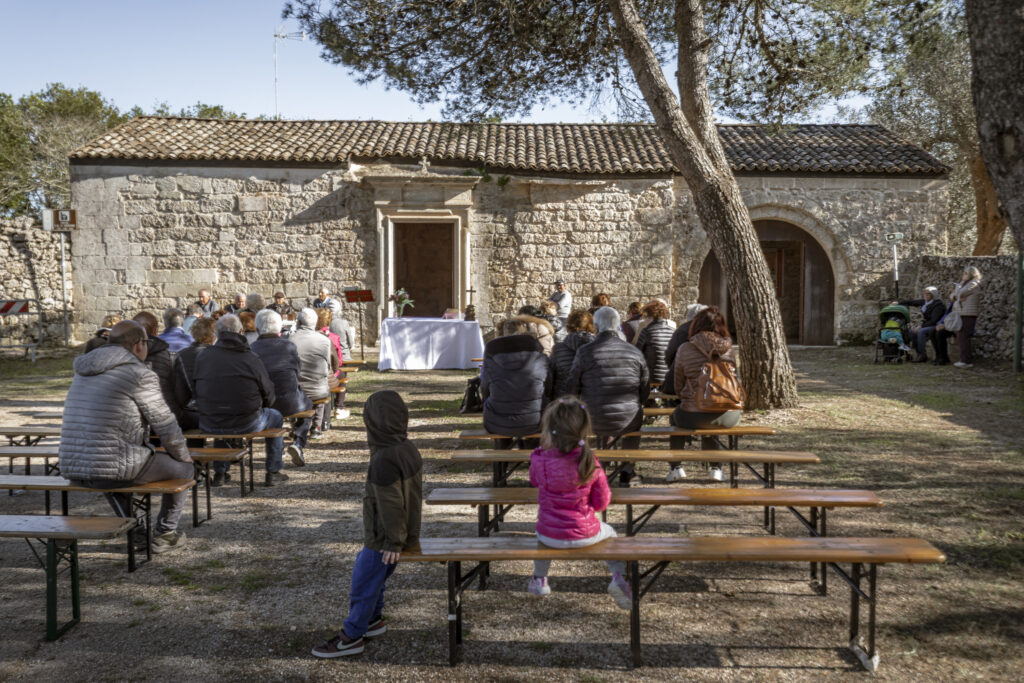
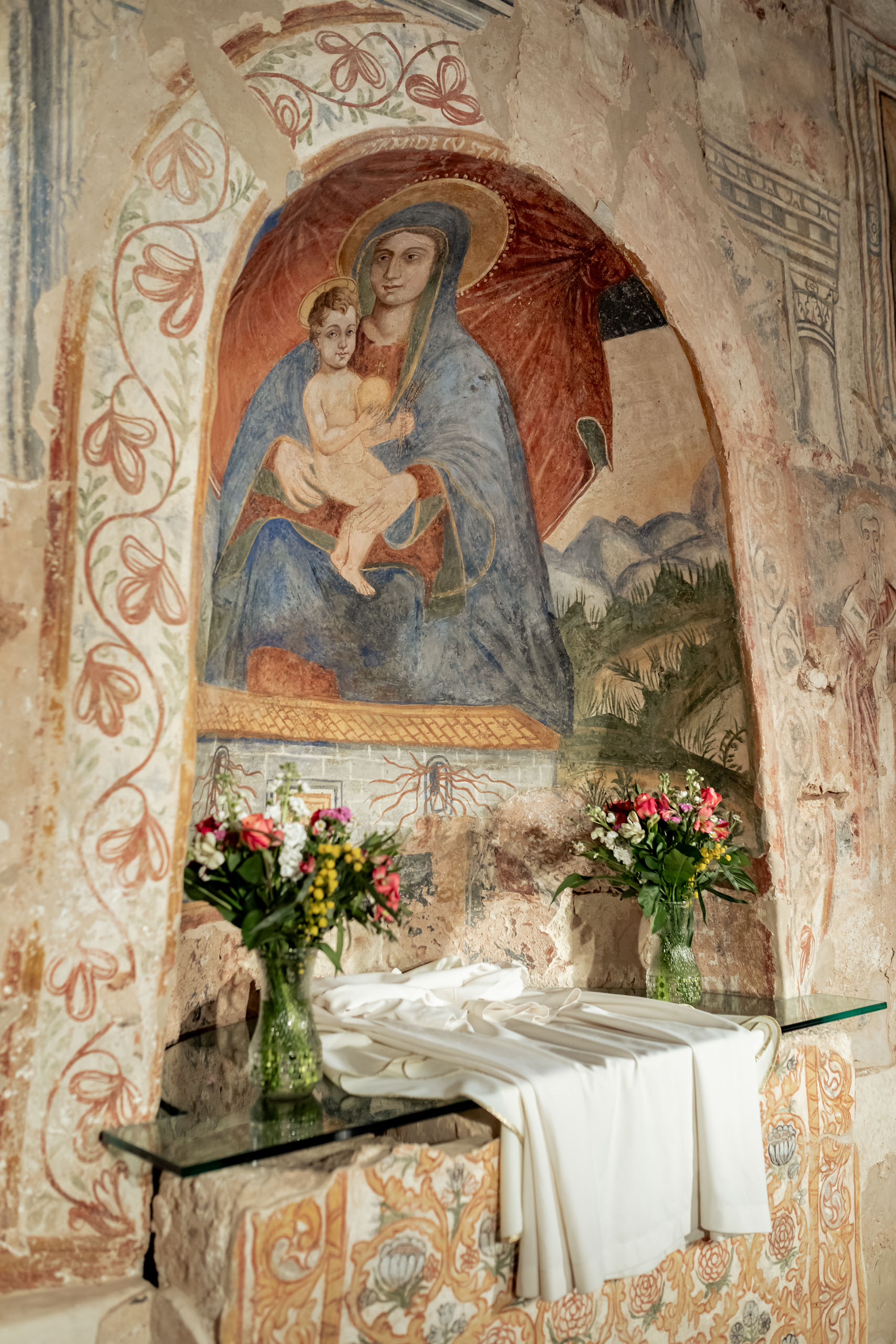
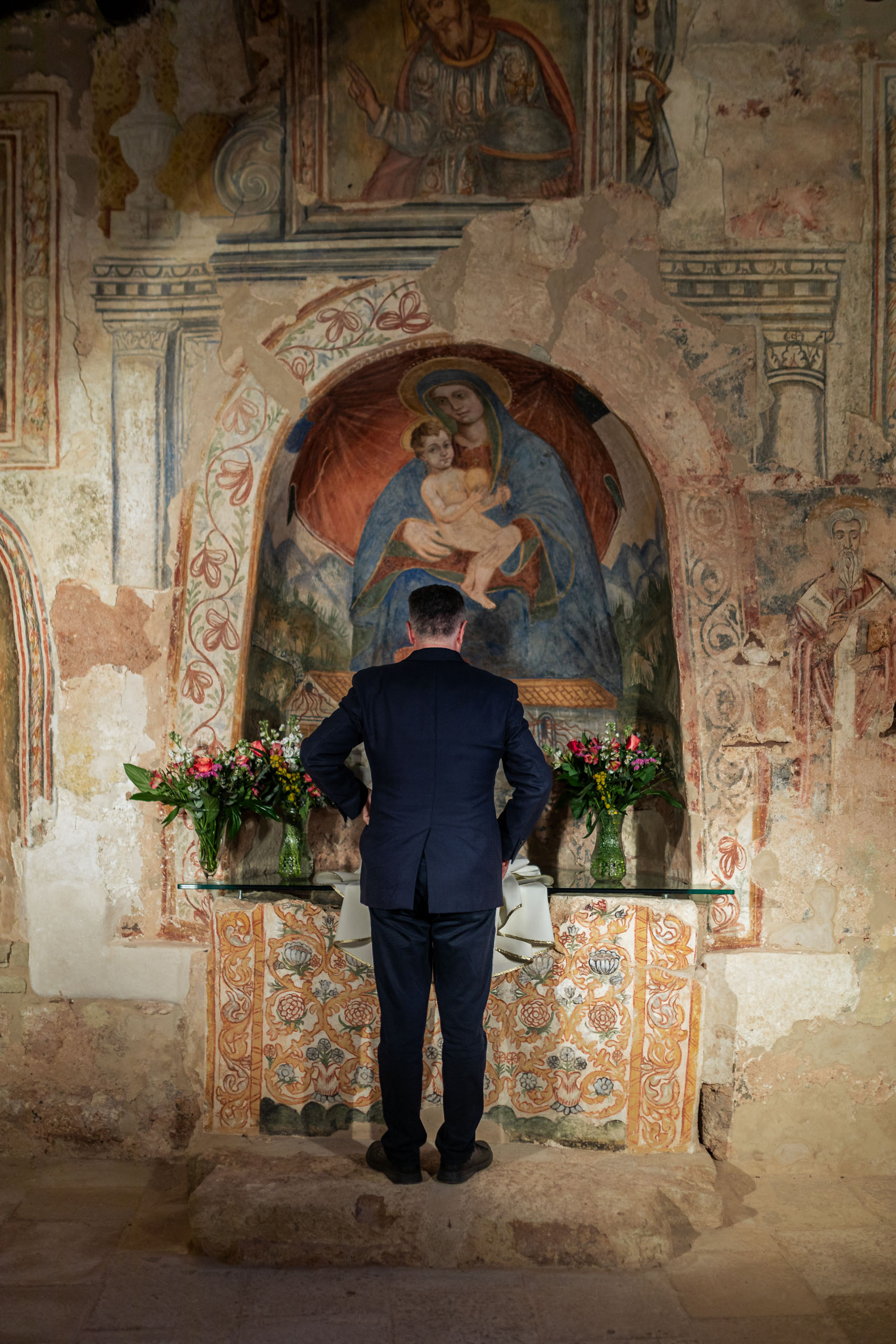
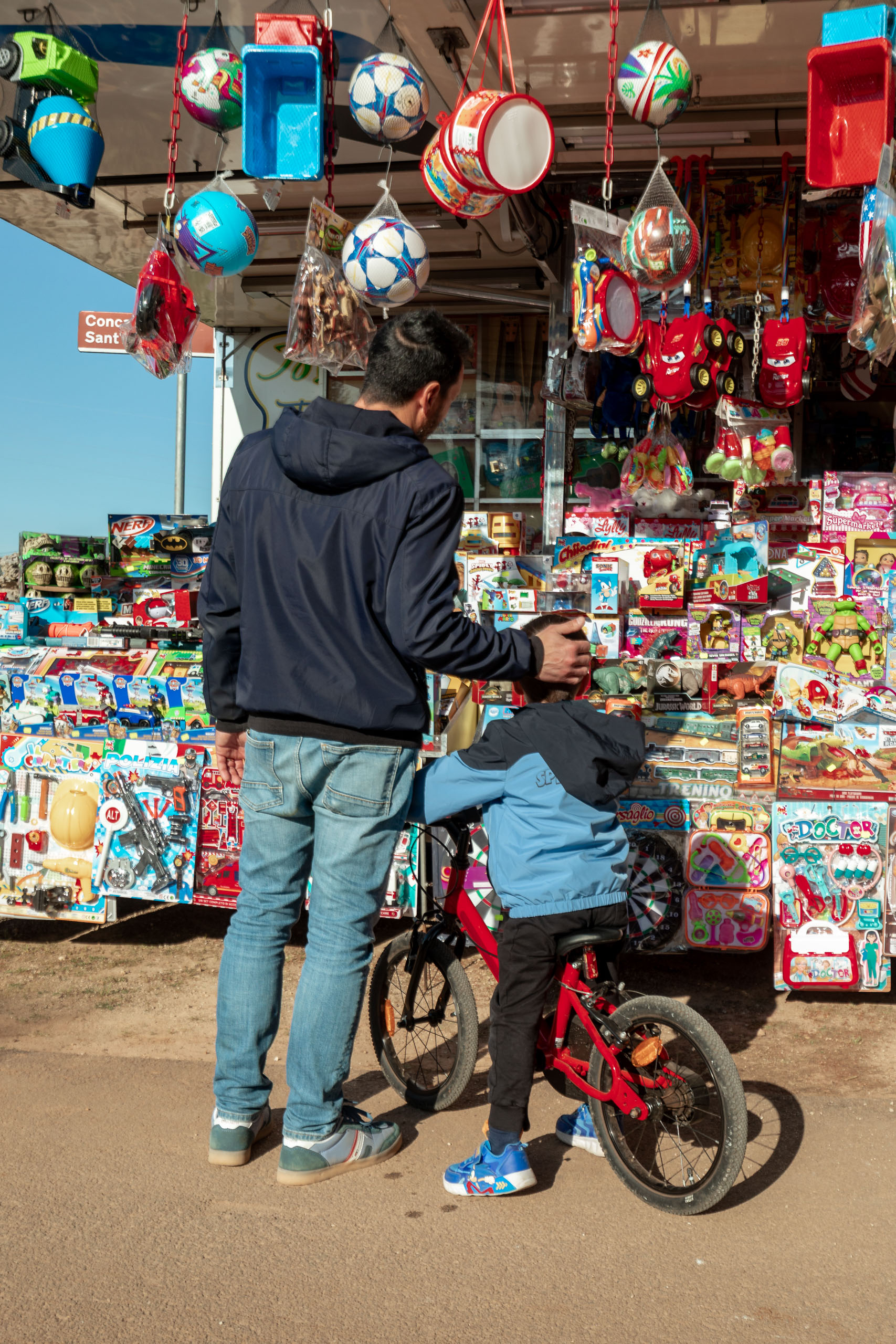
The symbolic heart of the church, however, is the magnificent Madonna of Constantinople, painted in 1514, which still dominates the semi-dome of the apse. The Virgin is enthroned with the Child, and beneath her appears a small church enveloped in flames. It is a powerful image evoking Mary's protection over a threatened community. Following the trauma of the sack of Otranto in 1480, this theme spread throughout Salento, where Marian devotion became a symbol of protection, hope and rebirth. In the following centuries, the church continued to transform. New entrances were added, certain rooms were reconfigured, and further decorative additions were made. But nothing completely erased what had come before. Santa Maria di Miggiano continued to grow through stratification, preserving within its walls the traces of every age it moved through. Around this small church, community life also continued to thrive. Local chronicles even record fierce rivalries between Muro Leccese and the nearby town of Sanarica during the traditional fair held near the building. Tensions ran so high that an agreement had to be established: the parish priest of Muro was required to celebrate the Eucharist during the festival to retain jurisdiction over the church. Otherwise, the sanctuary would pass to Sanarica. This curious episode reveals just how deeply this place was considered an integral part of the collective identity.
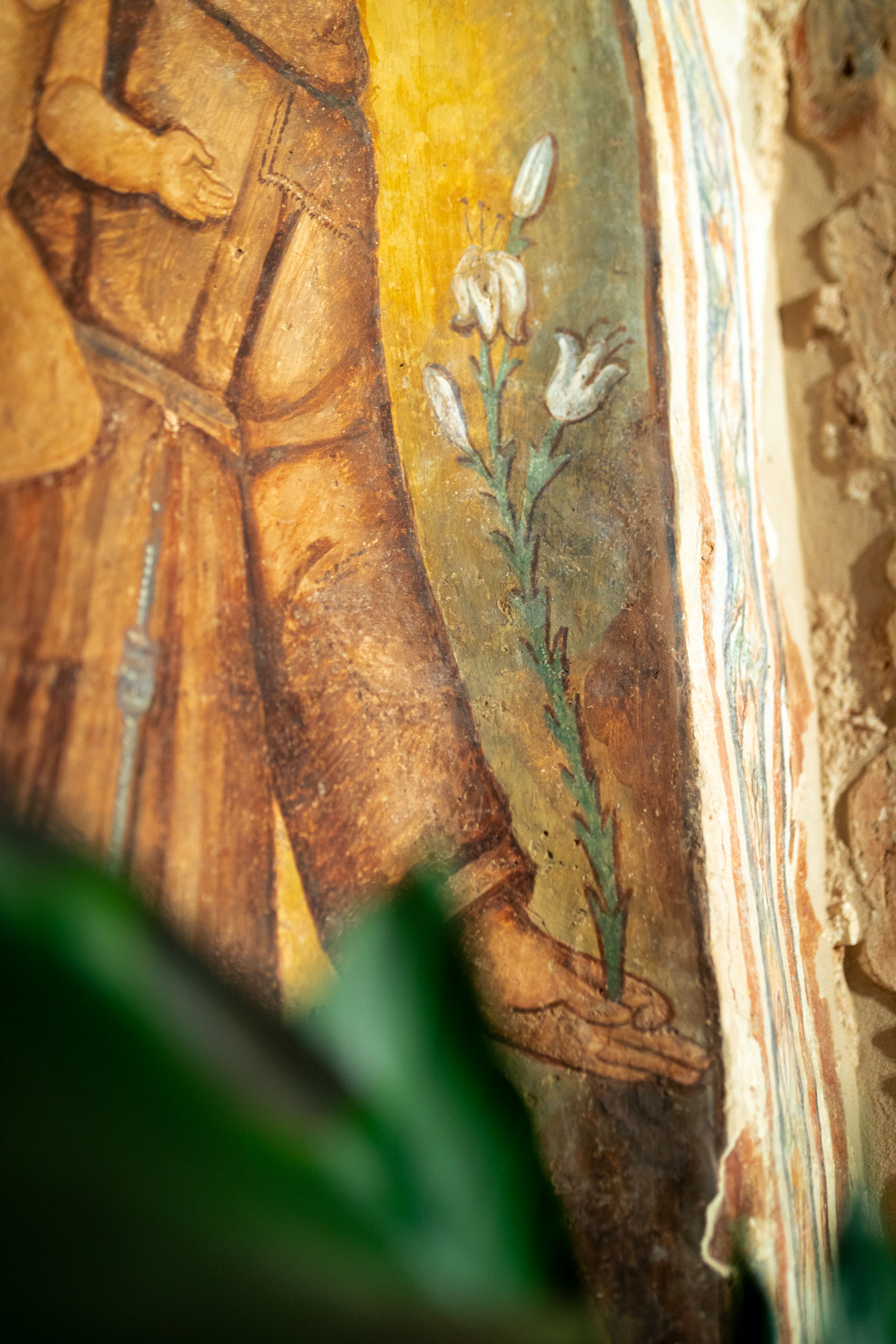
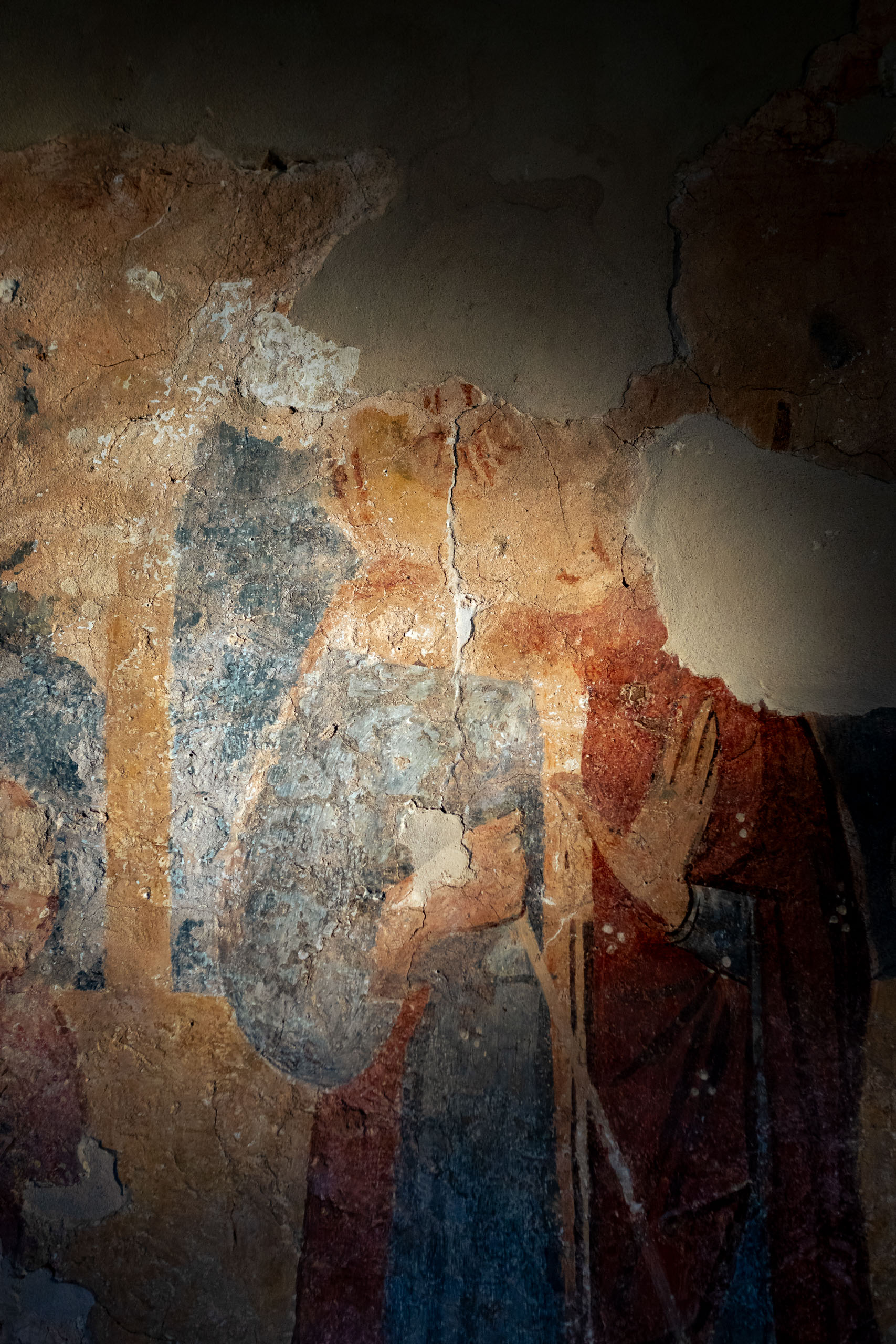
Today, Santa Maria di Miggiano continues to tell all these stories at once: the history of vanished
villages and that of the communities that inhabited them; the history of Byzantine culture and
that of its encounter with the West; and the history of popular devotion and that of art that
bridges the centuries.
One of Salento's most profound souls: a Mediterranean land that has learned to make the
encounter between cultures its greatest treasure.